

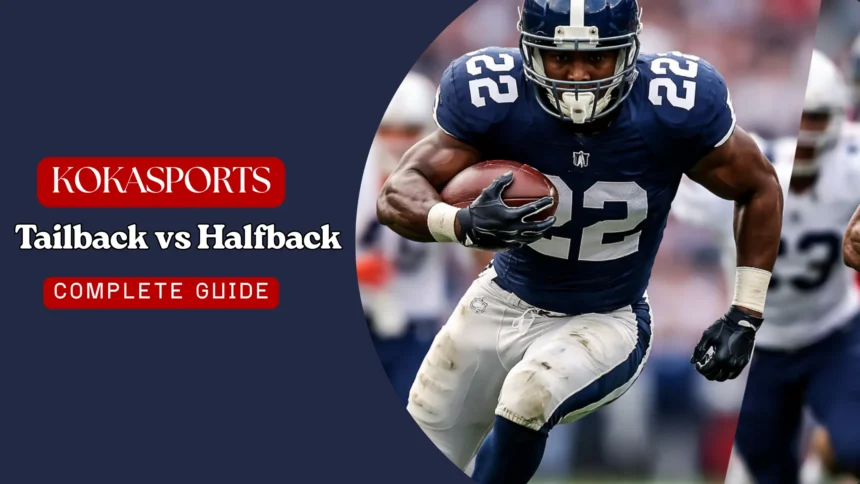
In modern football, tailback and halfback usually refer to the same position — the primary running back in the offense. Historically, a tailback lined up deepest in the backfield, while the halfback lined up slightly closer to the quarterback. Today, most teams simply use the term running back for both roles.
The difference between tailback vs halfback is one of the most common questions in football terminology. Both positions refer to the main ball carrier who lines up in the offensive backfield and handles most running plays. The distinction mainly comes from older formations and coaching terminology rather than any major difference in responsibilities.
Whether you’re new to American football or brushing up before fantasy football season, understanding the difference between a tailback and a halfback can help you better read offensive formations, evaluate players, and follow the game more closely.
Tailback vs Halfback: A Direct Comparison
Here is a side-by-side look at the difference between halfback and tailback roles:
| Feature | Tailback | Halfback |
|---|---|---|
| Lineup depth | Deepest back in the formation | Behind or beside the QB |
| Primary role | Carry the ball | Run and receive |
| Formation context | I-formation, single-wing | Spread, pro-style |
| Pass-catching | Moderate | High |
| Blocking role | Moderate | Secondary |
| Common in | College, traditional NFL | Modern NFL, spread offenses |
The difference between a tailback and a halfback is largely contextual. Both are the primary running back on the field. Both carry the ball on running plays. Both can be used as a receiver on pass plays. The distinction comes down to offensive formation and coaching preference not a meaningful gap in responsibilities. In fantasy football, both are simply listed as “RB,” confirming that from a running back position standpoint, they are one and the same.
Read Also: What is a Halfback in Football: Complete Guide
What Is a Halfback in Football?
The halfback is one of the oldest and most recognized positions in professional football. Historically, the term comes from older formations where backs were lined up at different distances from the line of scrimmage. The halfback was positioned halfway between the quarterback and the fullback hence the name “half back.”
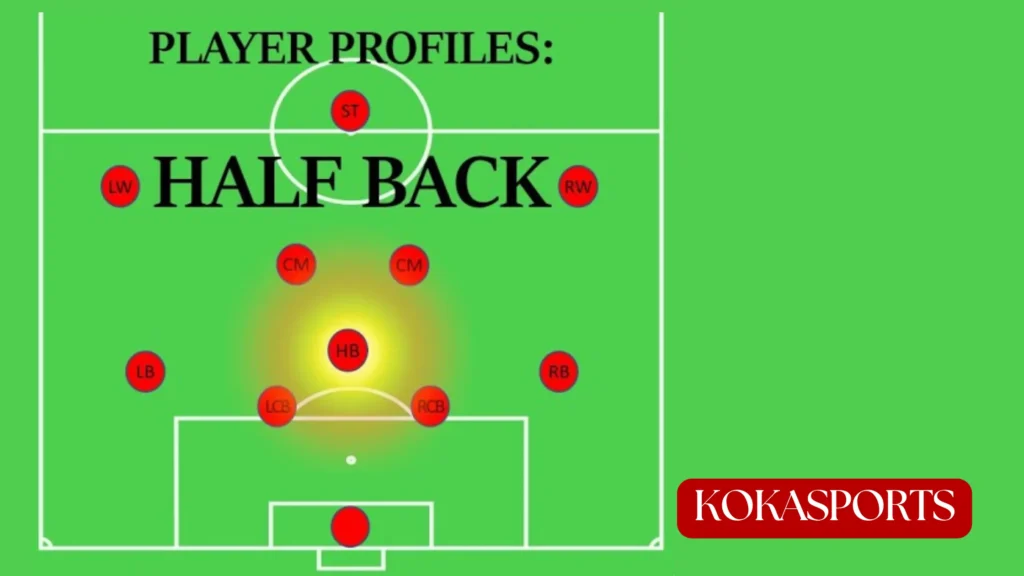
In today’s NFL, the halfback is typically the team’s featured offensive weapon out of the backfield. The halfback position demands a versatile skill set: speed, agility, pass-catching ability, and enough strength to run the ball between the tackles. The halfback will generally be involved in the majority of running plays, but is also a key asset on pass plays, lining up as a receiver coming out of the backfield.
Halfbacks in football are often the most athletic players in the offensive backfield. Their role requires them to read blocking from the offensive line, find gaps quickly, and make defenders miss in open space. Sometimes the halfback is also asked to block on passing downs, though this is secondary to their role as the primary running back. Some of the most celebrated NFL running backs in NFL history such as Barry Sanders, Marshall Faulk, and LaDainian Tomlinson played as classic halfbacks.
Key Traits of a Strong Halfback
- Speed to hit the hole before defenders close it
- Elusiveness halfbacks are among the most elusive running backs in the game
- Pass-catching out of the backfield as additional wide receivers in motion packages
- Ability to block when the offense needs protection on pass plays
- Vision to read the offensive line and find the right running lane
The starting halfback on most NFL teams is also called the feature back the player who handles the bulk of running plays and is the engine of the running game. The halfback or tailback label may change depending on the coach, but the responsibilities remain largely the same.
The Backfield: How Formation Shapes the Running Back’s Role
The backfield is the area directly behind the offensive line, where the quarterback and running backs align before the snap. How a team arranges its backfield largely determines what it calls its running back and whether that player is labeled a tailback or a halfback.
In a traditional I-formation, two backs line up in the backfield: a fullback positioned just behind the quarterback, and a tailback lined up deepest. This is the classic setup where the label “tailback” is most meaningful. In a one-back formation which dominates the modern NFL a single halfback stands alone in the backfield, and the distinction between tailback and halfback almost entirely disappears.
How the Offense Uses the Backfield
The offense uses the backfield in several different ways depending on the game plan:
- Running plays directed inside the tackles, where the running back follows the offensive line
- Outside runs that send the ball carrier toward the sideline with a blocker leading the way
- Screen passes and pass plays where the halfback leaks out of the backfield as a receiver
- Play-action fakes that freeze defenders while the quarterback looks downfield
The alignment of the backfield also signals intent to defenses. A two-back formation with a fullback and tailback telegraphs a running based offense, while a single halfback in an empty backfield suggests a pass-first approach.
The Difference Between a Tailback and a Halfback Explained
The difference between a tailback and a halfback is largely a matter of formation and era rather than any meaningful gap in responsibilities. Both players occupy the running back position, both carry the ball on running plays, and both contribute as receivers on pass plays. The real distinction lies in where they line up and what system the team runs.
The term tailback comes from older multi-back formations where the deepest back — the one at the “tail” of the backfield was given that label. The halfback name, on the other hand, described the back positioned roughly halfway between the quarterback and the end of the backfield. In today’s game, most teams run with one running back, making both labels apply to the same player.
Key Differences Still Worth Knowing
- Tailback is the preferred term in college football, high school football, and run-heavy systems
- Halfback is more common in modern NFL offenses and pass-oriented schemes
- When one or two running backs share the backfield, the deeper one is traditionally the tailback
- The halfback pass and halfback option are plays specifically associated with the halfback label
- In fantasy football, both are simply listed as “RB” confirming the overlap
What Is a Tailback and How Does It Differ?
The tailback position refers specifically to the running back who lines up at the very back or “tail” of an offensive formation. In older systems like the single-wing or wishbone, multiple backs shared the backfield, and the player who lines up farthest from the line of scrimmage was the tailback. That back who lines deepest had more room to build speed before taking the handoff.
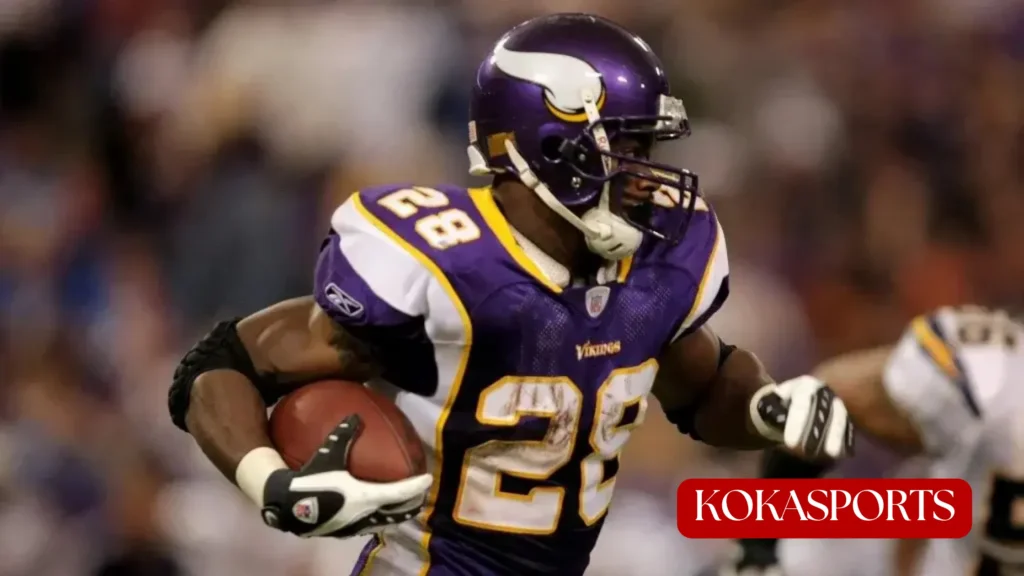
In today’s NFL, the tailback position is functionally identical to the halfback in most modern sets. When a team uses one running back on the field in a shotgun or I-formation, that player can accurately be called either a tailback or a halfback. The distinction matters more in college football and high school football, where older football terminology lives on.
The tailback or fullback distinction is also worth noting: the tailback typically has better running ability and handles the majority of running plays, while the fullback focuses on blocking as a lead blocker and excels in short yardage situations. In Canadian football, these positional labels carry slightly more defined meanings, but in the modern American game, halfback or tailback are used interchangeably.
Running Ability: What Separates the Best Running Backs
Running ability is the defining trait of any tailback or halfback, and it goes far beyond raw speed. The best running backs in professional football combine vision, balance, acceleration, and instinct to consistently gain yards against elite defenses. Running ability is what scouts look for first when evaluating a running back’s potential at the NFL level.
Great running ability includes reading blocks before they develop, pressing the hole to make defenders commit, and then exploding through the gap with burst. Elusive running backs add the ability to make tacklers miss in open space, turning short gains into big plays. Stronger running backs may lack elite speed but compensate with power through contact, making them ideal in short yardage situations and at the goal line.
What Running Ability Looks Like in Professional Football
In professional football, running ability is evaluated across several dimensions:
- Vision — the ability to see the offensive line blocks develop and react quickly
- Burst — the acceleration to hit the gap at full speed before defenders close
- Balance — staying upright through contact and gaining extra yards after the tackle attempt
- Pass-catching — catching pass plays cleanly out of the backfield as a receiver
- Blocking — pass protection to keep the quarterback clean on pass plays
The running back’s success in professional football ultimately comes down to how well their specific running ability fits the team’s offense and formation. A scat back with elite agility thrives in a spread offense, while a power back dominates in a running based system that prioritizes running plays and physical football.
Different Types of Running Backs in Modern Professional Football
Beyond the halfback and fullback distinction, modern professional football offenses deploy several specialized running back types:
- Scat backs — small, quick running backs built for pass-catching; among the most elusive running backs in the game
- Power backs — physical runners who dominate in short yardage situations and near the goal line
- Feature backs — the starting halfback who handles the majority of running plays and anchors the running game
- Third-down backs — specialists deployed mainly on pass plays for their receiving and blocking ability
The halfback option and halfback pass are two specialty calls that highlight just how versatile the back position can be. In a halfback option, the halfback to run or throw after receiving a pitch from the quarterback. In a halfback pass, the running back becomes a passer, adding a layer of deception to the offense.
Conclusion
The tailback vs halfback debate comes down to history and context more than any real gap in what these running backs do on the field. Both are the primary running back in an offense, responsible for running plays, receiving, and occasional blocking. The backfield they line up in and the formation the team runs determines which label gets used but the job description is identical. The fullback remains a genuinely separate role, a power back built around blocking rather than running ability.
For fans, coaches, and fantasy football players alike, the most important thing is recognizing what these backs bring to the offense: elite running ability, versatility, and fit within the formation. Whether your favorite team calls their star running back a halfback, tailback, or simply “the back,” the mission is the same get the ball and move it forward.
FAQs
Is a tailback the same as a halfback?
Yes, in modern football both terms usually refer to the same primary running back position.
What is the difference between a tailback and a fullback?
A tailback carries the ball and catches passes, while a fullback mainly blocks and handles short-yardage runs.
Why do some coaches say tailback and others say halfback?
The difference is mostly tradition college coaches often say tailback, while the NFL uses halfback or running back.
Can a halfback throw a pass?
Yes, plays like the halfback pass allow the running back to throw the ball to surprise the defense.
Are fullbacks still used in the NFL?
Yes, but far less often, as many teams now prefer extra wide receivers or tight ends instead.