

Super Bowl LX arrives with a familiar buzz, yet much of its identity feels newly shaped. New England and Seattle return to the game’s biggest stage, but with different leadership, evolving systems, and a matchup defined more by progression than nostalgia. As kickoff approaches, attention shifts beyond the final score toward what will linger once the confetti falls.
That’s where the Super Bowl MVP conversation truly lives. Not as a race for an award, but as a lens through which the game is remembered. One moment can steady chaos. One player can define the night. History suggests those moments often belong to the same few names but not always in predictable ways.
What Separates a Great Game From an MVP Moment
A player can perform well in a Super Bowl and still fade quietly into the box score. MVP performances feel different in real time. They interrupt the rhythm of the game. They force attention. They arrive when the outcome is uncertain.
Statistics matter efficiency, yardage, touchdowns but Super Bowl MVPs are often decided by moments under pressure. Late drives. Third-down conversions that flip momentum. Defensive plays that silence a stadium in a single snap.
Some performances are technically excellent. Others are unforgettable. Voters, like fans, tend to remember the latter especially when the game turns on one defining sequence rather than a complete stat line.
Quarterbacks at the Center of the Super Bowl MVP Conversation
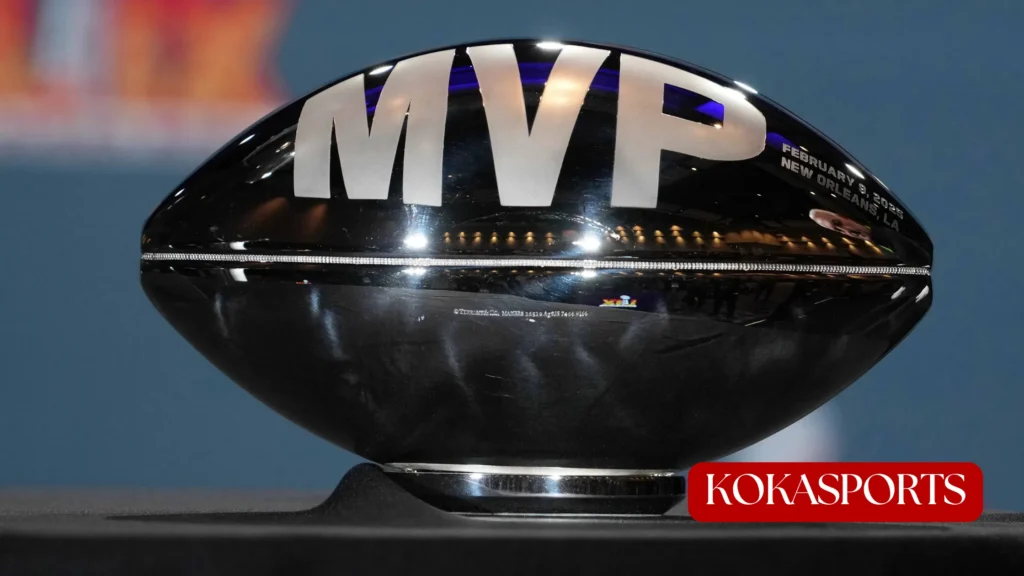
Quarterbacks dominate MVP history for a reason. They touch the ball on nearly every snap, absorb blame when things unravel, and receive credit when everything aligns. Super Bowl LX features two contrasting quarterback narratives, each compelling in its own way.
Drake Maye: The Fast-Track Franchise Quarterback
Drake Maye’s ascent has been rapid enough to feel surreal. In just his second season, he’s already playing with command and composure well beyond his years. Leading the NFL in passer rating and completion percentage, his numbers reflect control more than spectacle.
What separates Maye is how he handles pressure. New England’s offense doesn’t overwhelm with star power, which places decision-making squarely on his shoulders. In a Super Bowl environment, quarterbacks who manage that spotlight tend to remain in the MVP discussion deep into the fourth quarter.
Read Also: How Long is a Football Field? Complete Guide to Football Field Dimensions
Sam Darnold: Experience, Confidence, and Control
Sam Darnold’s path has been longer and less direct. His resurgence in Seattle has unfolded quietly, even as the Seahawks powered through the season with balance and efficiency. That journey personal renewal within a system that hums shapes how his performances are evaluated.
Darnold plays with calm. He distributes efficiently, resets protections, and avoids reckless throws. Those traits don’t always dominate headlines, but they matter most when stakes rise. Historically, quarterbacks who look settled early often stay central to the MVP conversation as Super Bowls tighten late.
Before kickoff, many fans evaluate the odds to win Super Bowl MVP, as a snapshot of where influence might emerge not as prediction, but as perspective on who may shape the game.
Skill Players Who Can Steal the Spotlight
Quarterbacks may lead the conversation, but Super Bowls have a way of elevating others. A receiver catches fire. A running back controls tempo. Suddenly, the story shifts.
Jaxon Smith-Njigba and the Power of a Signature Game
Jaxon Smith-Njigba enters Super Bowl LX as one of the league’s most productive receivers. His anticipated matchup with Christian Gonzalez has been circled for weeks. Elite receivers versus elite corners often produce moments worth remembering.
If Smith-Njigba delivers explosive plays or a late touchdown, the narrative could tilt quickly. Wide receivers rarely win Super Bowl MVPs but when they do, it’s because the game bends around them.
Kenneth Walker III and the Case for Control
Kenneth Walker III doesn’t rely on highlight-reel runs to make an impact. His value shows up in first downs, clock control, and defenders worn down over four quarters.
Running backs win MVPs when games slow to their rhythm when patience outweighs flash, and four yards feel decisive. That path is narrow, but still very real.
Stefon Diggs as the Veteran X-Factor
Stefon Diggs brings something less measurable: experience. Timing. An instinctive sense of where to be when defenses adjust. If coverage shifts elsewhere, Diggs could quietly stack crucial catches that reshape the game.
These plays rarely dominate highlight packages, but they linger in the minds of voters when awards are decided.
When Defense Shapes the Super Bowl MVP Story
Defensive MVPs are rare but when they arrive, they do so with force. Often without warning. One snap can change the temperature of the entire game.
Defensive moments that could reshape the MVP conversation include:
- Devon Witherspoon turning anticipation into a game-changing takeaway,
- Christian Gonzalez erasing a primary target with silent efficiency,
- K’Lavon Chaisson collapsing pockets before plays can develop.
These performances don’t accumulate quietly. They announce themselves instantly and linger long after the offense leaves the field.
Narrative, Momentum, and the Fourth-Quarter Effect
Super Bowl MVPs are usually decided late. Early dominance helps, but fourth-quarter moments seal memories. Timing often outweighs volume.
Media voters weigh narrative sometimes subconsciously. Fans add emotional weight. One late play can eclipse three steady quarters. That’s the gravity of the Super Bowl: a season compressed into moments.
Watch body language after setbacks. Watch who demands the ball. Watch who stays calm when momentum swings. MVPs often reveal themselves gradually then all at once.
Conclusion: The Night That Shapes Legacies
Super Bowl LX will leave behind statistics, highlights, and debates. What lasts longer is simpler: a feeling. A moment. A face tied to the instant everything changed.
For some players, this night represents validation. For others, arrival. The MVP trophy captures that in metal, but the real reward is memory. Years from now, fans won’t recite stat lines they’ll remember the throw, the catch, the stop.
That’s why the Super Bowl MVP conversation matters. Not because it predicts the future, but because it sharpens how we watch the present.
FAQs: Super Bowl MVP Explained
Who usually wins the Super Bowl MVP?
Quarterbacks win most often due to their constant involvement, but wide receivers, running backs, and defenders can win when their impact defines the game.
Can a defensive player realistically win Super Bowl MVP?
Yes, though it’s rare. Defensive MVPs typically come from game-changing turnovers, sacks, or plays that directly decide the outcome.
Do fourth-quarter plays matter more for MVP voting?
Absolutely. Late-game moments carry more narrative weight and are often what voters remember most.
Is the Super Bowl MVP always on the winning team?
Almost always. MVPs are typically selected from the Super Bowl champion, with very few historical exceptions.
Are MVP odds a reliable predictor?
They offer insight into expected influence, but Super Bowls often elevate unexpected heroes, making the award difficult to predict.