
If you have ever watched American football and seen the quarterback pretend to hand the ball off before throwing it deep, you have already seen play action in real life. The play action meaning is simple on the surface, but the strategy behind it is incredibly deep.
This guide covers everything you need to know what play action means, why it works so well, how every player is involved, and why the play-action pass remains one of the most powerful weapons in football today.
What Is Play Action Meaning? (Simple Definition)
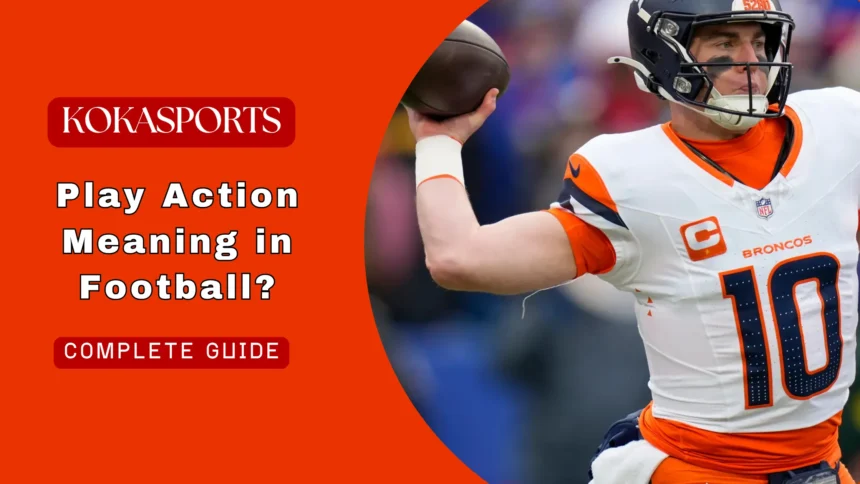
Play action meaning: A play-action pass is a football play where the quarterback fakes a handoff to a running back to trick the defense into thinking a run is coming, before throwing the ball downfield.
This is the play-action pass definition in its simplest form. The quarterback pretends to hand the ball off. The defense reacts to a run that never actually happens. Receivers get wide open. The quarterback throws for a big gain.
That is it. That is play action.
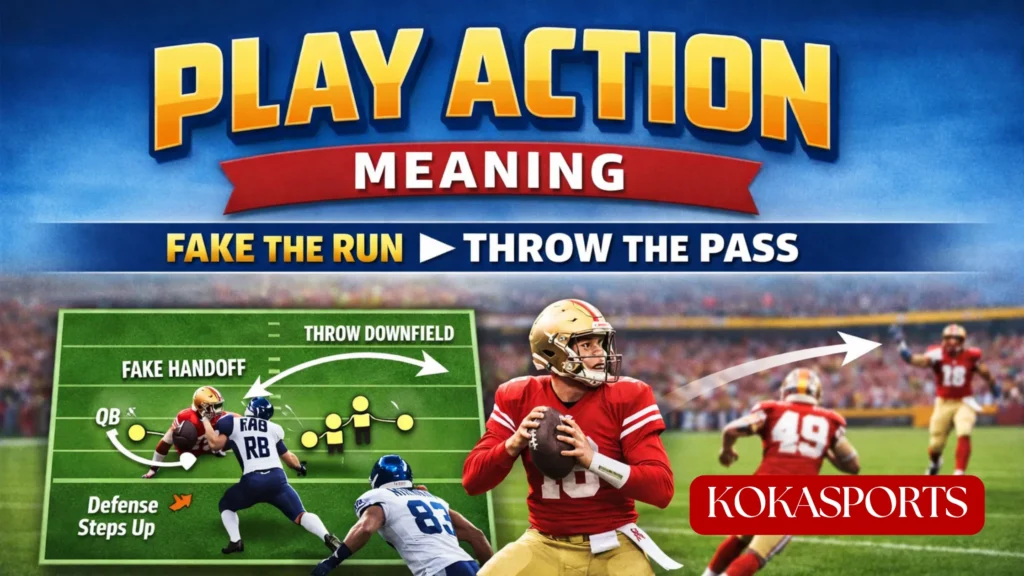
Here is exactly what happens step by step:
- The offense lines up looking like they will run the ball
- The quarterback takes the snap and moves toward the running back
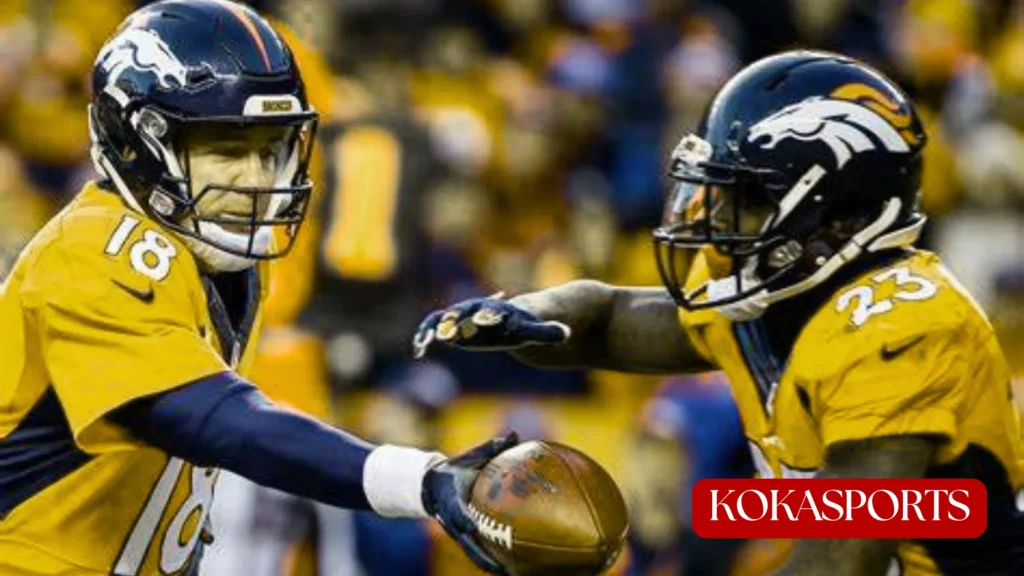
- The quarterback fakes a handoff by pushing the ball into the RB’s midsection
- The RB drives hard into the line pretending he has the ball
- The quarterback pulls the ball back and sets up behind the line of scrimmage
- Defenders who reacted to the fake are now completely out of position
- A receiver running a deep route is suddenly wide open downfield
- The QB throws the ball for a massive gain
Simple. Smart. Brutally effective.
Why Play Action Meaning Matters in Modern Football
The play action meaning goes far beyond one trick play. In today’s NFL, play action is a core strategic tool that shapes how entire offenses are built. Here is why it matters so much:
It exploits human instinct. Defenders are trained to react to visual cues. When they see a fake handoff, their body moves before their brain catches up. That split-second reaction is all a good offense needs.
It creates big plays. Play action passes produce significantly more yards per attempt than standard passes. The deception creates separation that pure route running alone cannot always generate.
It slows down the pass rush. When defenders hesitate on the fake, the pass rush also hesitates. This gives the QB cleaner pass protection and more time to find open targets.
It keeps defenses guessing. Even the mere threat of play action forces defenses to respect both the run and pass on every single snap, which makes the entire offense harder to stop.
“Play action is not just a play. It is a philosophy. You are selling a lie so convincingly that the truth catches the defense completely off guard.” Common principle among NFL offensive coordinators
How the Play-Action Pass Works: Every Player Explained
The Quarterback
The quarterback carries the full weight of making play action believable. If his eyes move toward his receiver too early, or if the fake looks half-hearted, the defense will not bite and the play falls apart completely.
Great quarterback play action technique includes:
- Keeping eyes locked on the running back during the fake never scanning early
- Fully extending the ball toward the RB so it looks exactly like a real handoff
- Using smooth footwork when moving from fake to throw
- Selling the play fake with full body commitment before setting up to throw the ball
Best modern play action quarterbacks:
| Quarterback | Team | Why He Is Elite at Play Action |
|---|---|---|
| Patrick Mahomes | Kansas City Chiefs | Sells fake perfectly, elite deep ball |
| Lamar Jackson | Baltimore Ravens | Run threat makes every fake terrifying |
| Josh Allen | Buffalo Bills | Physical fake, strong arm downfield |
| Jalen Hurts | Philadelphia Eagles | Dual threat keeps defenses frozen |
The Running Back
The running back is the actor in this play. His job is to make every single defender believe he actually received the ball. The RB must drive hard into the line, lower his shoulder, and absorb contact all while carrying absolutely nothing.
A lazy running back on a play action play gives the whole thing away immediately. If he drifts casually instead of attacking the line of scrimmage, sharp defenders will recognize it instantly and drop back into pass coverage.
The Offensive Line
The offensive line is the most overlooked part of play action. At the snap, linemen briefly use run blocking technique before switching to pass blocking. This sells the illusion at the point of attack. A lineman firing off the ball like it is a run play holds a pass rusher’s attention for that crucial extra half second and that half second is everything.
Receivers and Tight Ends
Receiver routes on play action plays are designed to develop over two to three seconds exactly the time the defense wastes reacting to the fake. Deep crossing routes, post routes, and corner routes all pair perfectly with play action because they need that extra time to develop.
Tight ends are the secret weapon here. When linebackers and safeties crash forward to stop the run, the tight end slips quietly behind the linebackers into a massive open window over the middle of the field. This is why tight ends score a disproportionately high number of touchdowns on play action compared to standard passes.
Play Action Meaning vs Other Similar Concepts
Play Action vs Draw Play
These two concepts are mirror images of each other:
| Concept | The Fake | The Real Play |
|---|---|---|
| Play Action | Fake run | Pass the ball downfield |
| Draw Play | Fake pass | Run the ball |
A draw play makes the defense think a pass is coming, then runs the ball. Play action does the exact opposite. Both exploit the same truth: defenders react to what they see first, not what actually happens.
Play Action vs Screen Pass
A screen pass is a short throw behind the line of scrimmage, usually with blockers already set up in front of the receiver. Play action sends receivers deep downfield for much bigger gains. Both are deceptive, but they attack completely different areas of the field.
Play Action vs RPO
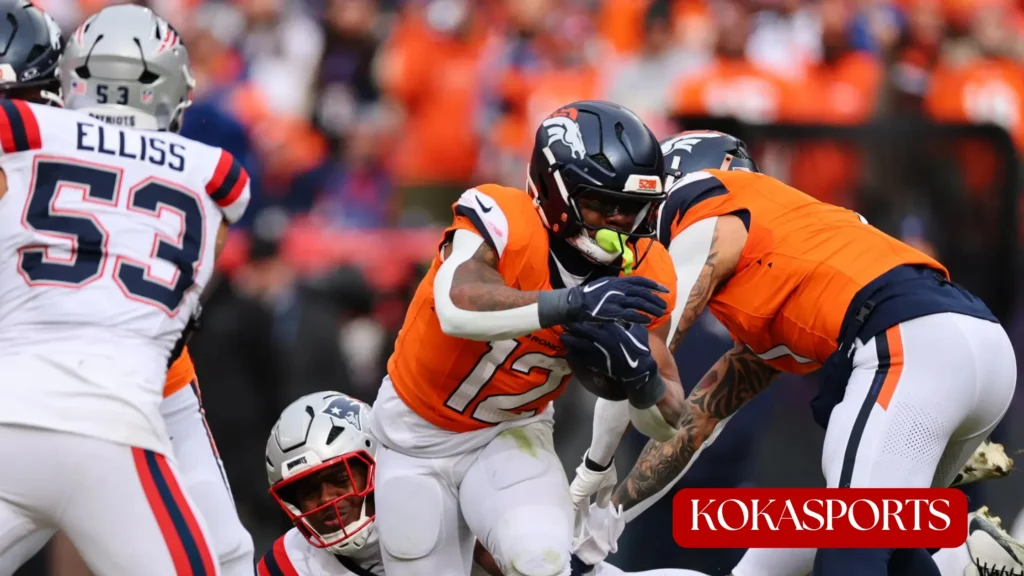
The RPO (run pass option, also written as run-pass option) is the concept most commonly confused with play action. Here is the key difference in plain language:
- In play action, the quarterback has already decided to pass before the snap. The fake run is just the tool used to freeze the defense.
- In an RPO, the quarterback reads a specific defensive player after the snap and decides in real time whether to hand off or throw a quick pass to a receiver running a short route.
Simple comparison:
| Feature | Play Action | RPO |
|---|---|---|
| Pass decision made | Before the snap | After the snap |
| Is the run a real option? | No always a pass | Yes QB can hand off |
| Does QB read defense? | No read after snap | Yes, reads a key defender |
| Main tool | Fake handoff | Live read option |
Football coaches today often blend both concepts in the same play, making modern offenses nearly impossible to fully decode on the defensive side.
Real Game Case Studies: Play Action in Action
Case Study 1: Kyle Shanahan and the San Francisco 49ers
Kyle Shanahan is widely considered the best play action coach in the NFL. His 49ers consistently lead the league in play action usage every season. Shanahan builds his entire offense around a strong run game that forces defenses to stack defenders near the line of scrimmage. Once that defensive commitment is established, run action fakes blow the defense wide open for deep throws. His quarterbacks regularly rank among the league leaders in yards per attempt specifically because of how heavily and smartly they use play action.
Case Study 2: Lamar Jackson and the Baltimore Ravens
Lamar Jackson’s own ability to run the ball makes play action even more dangerous in Baltimore. Defenses genuinely cannot ignore any fake because Jackson might actually keep the ball himself and run for a first down. When he does execute a play-action pass, every safety has already moved toward the line expecting a scramble. The result is some of the most wide-open deep throws you will see anywhere in the NFL.
Case Study 3: Super Bowl LII — The Philly Special
One of the most famous play action moments in NFL history happened in Super Bowl LII. The Philadelphia Eagles called a play designed to look like a run near the goal line. The quarterback fakes, the defense completely collapses on the fake, and a receiver catches a touchdown in the end zone completely uncovered. Not a single defensive player covered the end zone receiver until it was already too late. Play action at its absolute finest.
Key Stats Every Football Fan Should Know
- Play action passes average 1.5 to 2 more yards per attempt than standard passes across the NFL
- Teams using play action on 20% or more of their pass plays consistently show higher offensive efficiency
- Tight ends score at nearly double the touchdown rate on play action vs. standard passes
- A pass attempt off play action succeeds at a higher rate in the first half of games
- Linebackers are statistically the defenders most likely to be caught out of position on a play action fake
- Play action still produces measurable results even when a team has failed to effectively run the ball all game, because defenders react to visual cues instinctively regardless
How Defenses Try to Stop Play Action
Good defenses do not just fall for the same trick every week. Here are the main tools defensive coordinators use:
Pattern-matching coverage is one of the most effective answers. Instead of reacting to backfield motion, defenders read the receiver running routes and match their coverage based on what develops, completely ignoring the fake.
Two-high safety shells keep a safety deep at all times. Even if one defender bites on the fake, there is always a deep safety available to cover the area behind the line of defenders. This limits the explosive plays that play action is specifically designed to create.
Disciplined pass rushing matters too. Pass rushers who over-commit upfield can get beaten immediately by a forward pass thrown right off the fake. Smart defensive ends learn to read pass blocking technique to identify play action before fully committing to the rush.
Man coverage is generally more vulnerable to play action because defenders have their backs to the quarterback and cannot see the fake run. Zone defenses hold up better because players are reading the whole field instead of chasing a single assigned man.
Frequently Asked Questions About Play Action Meaning
What is the play action meaning in simple terms?
Play action means the quarterback fakes a handoff to trick the defense into reacting to a run, then throws the ball instead. The action pass creates open receivers by exploiting the defense’s instinct to play the run.
Does play action only work if the run game is working?
Not always. A strong run game makes play action more effective, but research shows the fake still causes defenders to hesitate even when the offense has struggled to run. Defenders react to visual cues instinctively regardless of the game situation.
How is play action different from an RPO?
In play action, the quarterback has already decided to pass before the snap. In a run pass option, the QB reads a defender after the snap and decides whether to hand off or throw a quick pass to a receiver in real time. The decision timing is the key difference.
Why do tight ends benefit so much from play action?
When linebackers crash forward on the fake, the tight end runs freely into the open space behind the linebackers, making him an extremely easy target for the quarterback.
What does “qb fakes a handoff” mean exactly?
It means the quarterback fakes a handoff by extending the ball toward the running back without releasing it, then pulls the ball back to set up a throw. This movement triggers defenders’ run-stopping instincts and opens up throwing lanes downfield.
Can play action work from the shotgun formation?
Yes. Many modern NFL teams run play action from the shotgun with great success. The fake still freezes defenders even without the quarterback being directly under center.
Conclusion on Play Action Meaning
The play action concept is one of the oldest and smartest ideas in all of football. At its heart, the play action meaning is about using the defense’s own instincts against them. You show them a run. They react to the run. You throw the ball into the exact space they just abandoned.
A perfectly executed play-action pass requires every single player on offense to commit fully to the lie. The quarterback sells the fake. The running back sells the fake. The offensive line sells the fake. When all of that comes together at the same moment, the defense never had a chance.
Now that you fully know the play action meaning, watch for it the next time you sit down to enjoy a game. Pay attention to the linebackers the moment the ball is snapped. If you see them take even one step forward before recovering, you just watched play action do exactly what it was designed to do.