
The pin and pull concept has become one of the most powerful weapons in modern football. From youth football programs to college football powerhouses, teams everywhere are using this blocking scheme to create explosive plays. This guide breaks down everything you need to know about the pin and pull scheme, from basic rules to advanced variations that keep defenses guessing.
What Makes Pin and Pull Football So Effective
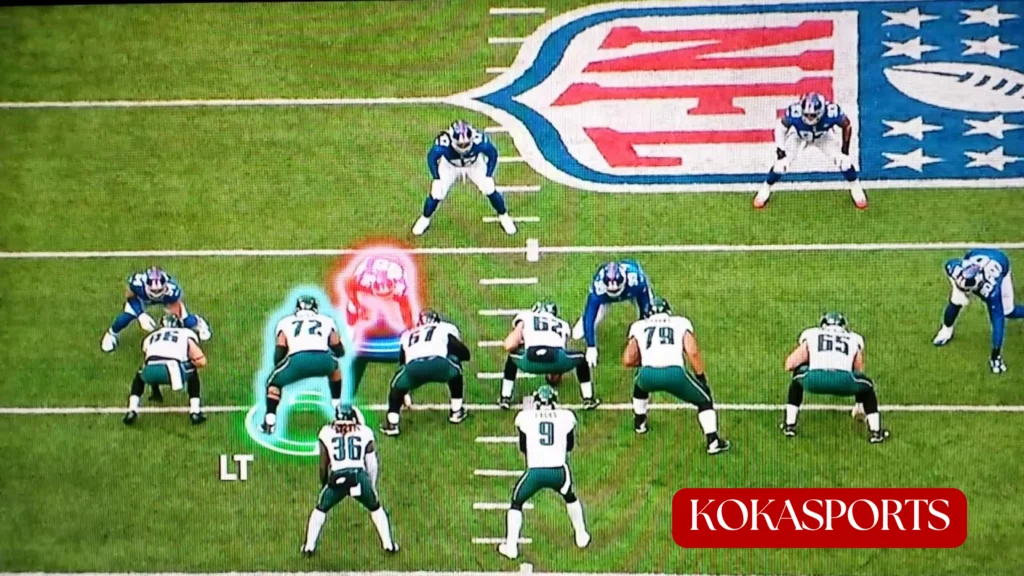
The pin and pull concept works by combining two simple blocking actions into one devastating run play. On one side of the formation, linemen “pin” defenders in place using aggressive angle blocks. On the other side, one or more players pull around to lead the ball carrier. This creates natural running lanes that are easier to execute than traditional zone run schemes.
Unlike inside zone or outside zone plays where every lineman moves in the same direction, pin and pull uses contrasting movements. This confusion keeps defenders honest and creates better angles for blockers. The offensive line doesn’t need to be massive or incredibly athletic – they just need to execute their specific job.
Key advantages of the pin and pull:
- Simpler rules compared to complex zone scheme blocking
- Creates natural cutback lanes for the rb
- Works against multiple defensive front alignments
- Easy to teach at the high school level and below
- Pairs naturally with rpo concepts and play action
Read More: RPO in Football: The Complete Guide to Run-Pass Option Plays
Breaking Down the Pin and Pull Blocking Rules
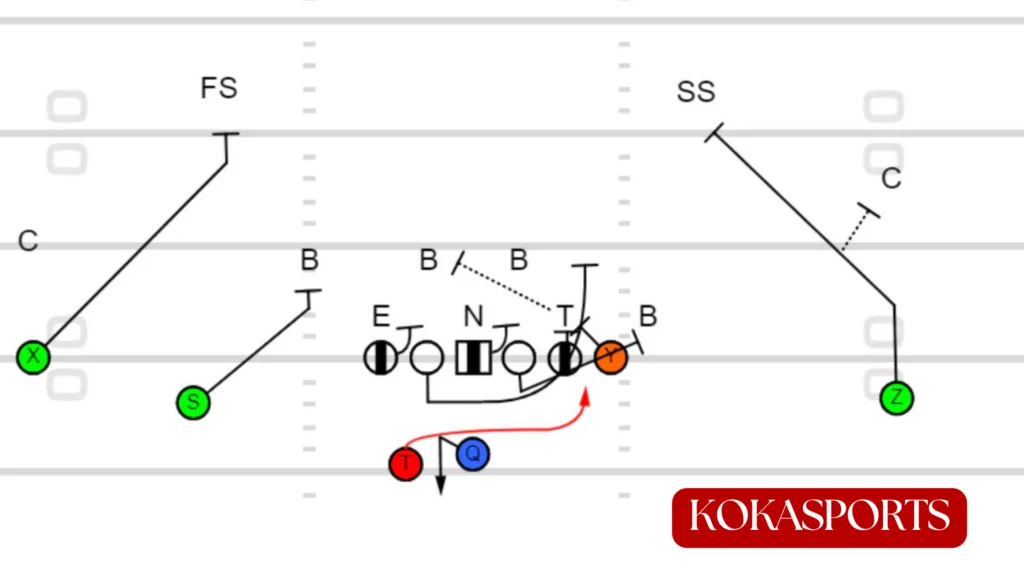
Every successful pin and pull starts with clear base rules that define who does what. The offensive coordinator typically identifies the “pin side” and “pull side” based on defensive alignment. Let’s break down the basic responsibilities that make this offense work.
Pin Side Responsibilities
The pin side tackle and guard have one job: stop their defenders from penetrating. They don’t need to create movement or reach defenders like in outside zone. Instead, they use their body position to “pin” the defensive line in place. This prevents penetration and keeps the running lane clean on the backside.
A good pin block doesn’t require perfect technique. The blocker just needs to get his body between the defender and the backfield. Even if the defender fights outside, the pin block has done its job by sealing the backside.
Pull Side Action
On the pull side, the magic happens. Typically, the offensive lineman opposite the pin side pulls around to lead through the hole. This puller becomes the lead blocker, targeting the most dangerous defender at the second level.
The first puller often aims for the playside linebacker, while a second puller might target the defensive backs or outside linebacker. This creates a numbers advantage at the point of attack that traditional gap scheme runs can’t match.
| Position | Pin Side Action | Pull Side Action |
|---|---|---|
| Center | Pin or combo to linebacker | Pulls on some variations |
| Guard | Pin defensive lineman | Pulls to lead block |
| Tackle | Pin down on edge | Seals or pulls depending on call |
| Tight End | Releases to second level | Blocks down or pulls around |
How the QB and Running Back Execute Pin and Pull
While the offensive line sets up the blocks, the qb and running back must execute precise timing and reads. The quarterback’s footwork determines whether the mesh happens on time. Most football coach staffs teach a simple two-step or three-step drop for the qb, depending on formation.
The running back aims for a specific landmark – usually the outside hip of the playside tackle. As the puller leads through the hole, the back follows closely, reading the blocks as they develop. Good backs in this offense stay patient and let the blockers create the lane before accelerating through.
Critical coaching points for the backfield:
- QB must ride the mesh long enough for blocks to develop
- Running back stays tight to the first puller‘s hip
- Ball carrier keeps eyes on the linebacker level
- Cutback is always available if frontside blocks fail
Pin and Pull vs Outside Zone: Key Differences
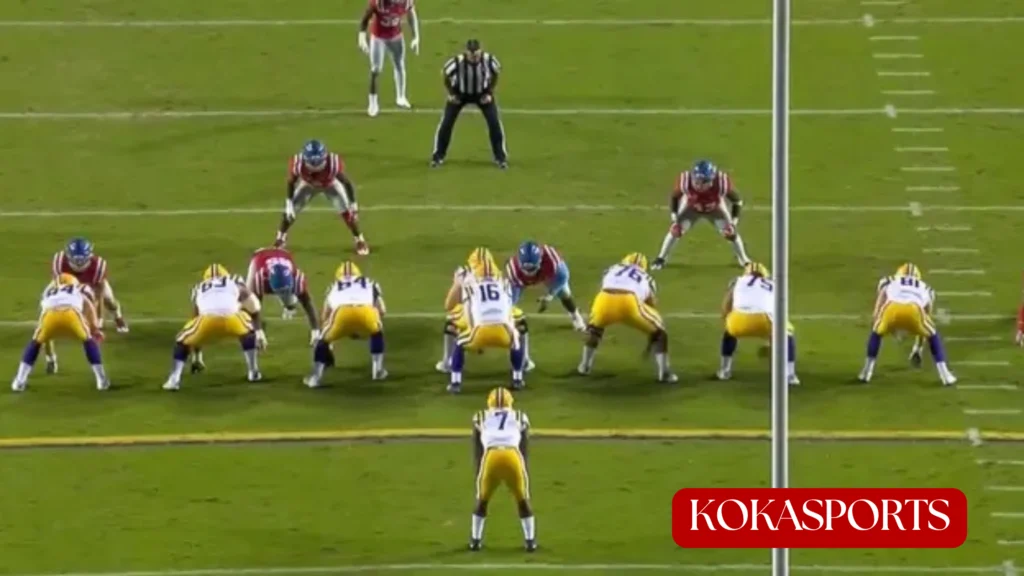
Many coaches wonder about pin and pull versus outside zone run schemes. While both attack the perimeter, they use completely different philosophies. The zone run game asks all linemen to move laterally and climb to linebackers. This requires excellent footwork and coordination across the entire offensive line.
Pin and pull simplifies this. Instead of five players executing difficult reach blocks, only the pullers need elite movement skills. The pin side blocks are straightforward and natural. This makes pin and pull much easier to install, especially at the youth football level where zone block schemes often break down.
The outside zone play works best with athletic linemen who can cover ground quickly. Pin and pull succeeds with any body type because the blocking rules don’t require lateral range. A slower guard can still execute a perfect pin block, even if he couldn’t reach block in outside zone.
Adding RPO Elements to the Pin and Pull Scheme
Modern offenses enhance pin and pull by layering rpo concepts on top of the run action. The pin and pull rpo gives the quarterback a quick pass option if defenders cheat to stop the run. This keeps defenses in conflict and opens up both the run game and passing game.
The most common rpos off pin and pull target the perimeter. As the offensive line executes their blocks, the qb reads a specific defender – usually the outside linebacker or force player. If that defender crashes down on the run, the quarterback pulls the ball and throws to a receiver on the edge.
Best RPO combinations with pin and pull:
- Slant RPO – Quick inside route against press man coverage
- Bubble RPO – Perimeter screen to the pull side
- Glance RPO – Shallow cross that attacks zone coverage
- Now screen RPO – Fast screen to the playside receiver
Famous programs like Chip Kelly‘s spread offenses at the college level have made rpo concepts inseparable from pin and pull. The Bixby offense and Montana State offense both use pin and pull rpo packages extensively. Even professional teams borrowed from the Mercer offense playbook, which built its identity around these complementary concepts.
Pin and Pull Variations: Buck Sweep and Beyond
The basic pin and pull play opens the door to multiple variations. The buck sweep is essentially a pin and pull with both guards pulling. This sweep play creates a convoy of blockers leading the runner to the edge. It’s devastating in the red zone where defenses pack the box.
Another popular variation uses motion from a tight end or fullback to add an extra puller. This perimeter run concept attacks space quickly and gives defenses one more blocker to account for. The motion also helps identify defensive backs responsibilities before the snap.
Some creative offensive line coach staffs use pin and pull as a constraint play off outside zone. They’ll show the same frontside action but execute different blocking, keeping linebackers frozen. This deception makes the base play even more effective.
Teaching Pin and Pull at the Youth Level
Youth football coaches love pin and pull because young players grasp it quickly. Unlike complicated zone play schemes that require reads and adjustments, pin and pull gives each kid one clear job. The guard pulls. The tackle pins. The center blocks his man. Simple.
When coaching in college or at the high school level, you can add layers like reads and rpo options. But at the youth level, keeping it simple wins games. Many championship game winners in youth leagues run almost exclusively pin and pull variations because kids execute it consistently.
Youth coaching tips:
- Use clear landmarks instead of technical terms
- Practice pulling footwork daily with simple drills
- Keep the backfield action identical every rep
- Don’t add rpos until kids master the basic run
Countering Defensive Adjustments
Smart defensive coordinators make adjustments to stop pin and pull once they see it on film. The defensive lineman might slant away from the pull, or linebackers might flow fast to the pull side. A defensive end might crash hard to disrupt the puller.
Good offensive coordinator staffs anticipate these adjustments. They might add a counter where the puller fakes the pull then blocks back. Or they use play action off the same look to hit defensive backs over the top. The pin and pull concept naturally sets up complementary plays that keep defenses guessing.
Against a bear front where two defensive lineman align over the guards, some teams switch to a zone run concept or adjust their base rules. The key is having answers built into your offense before defenses make adjustments during the football season.
Common defensive counters and solutions:
| Defensive Counter | Offensive Solution |
|---|---|
| Linebackers scraping over top | Run cutback lane or rpo bubble |
| Defensive line slanting | Use tight end to pull around or run opposite gap |
| Safety run support overload | Play action pass over the top |
| Edge setting by corners | Crack blocks from receivers or add motion |
Building Your Offense Around Pin and Pull
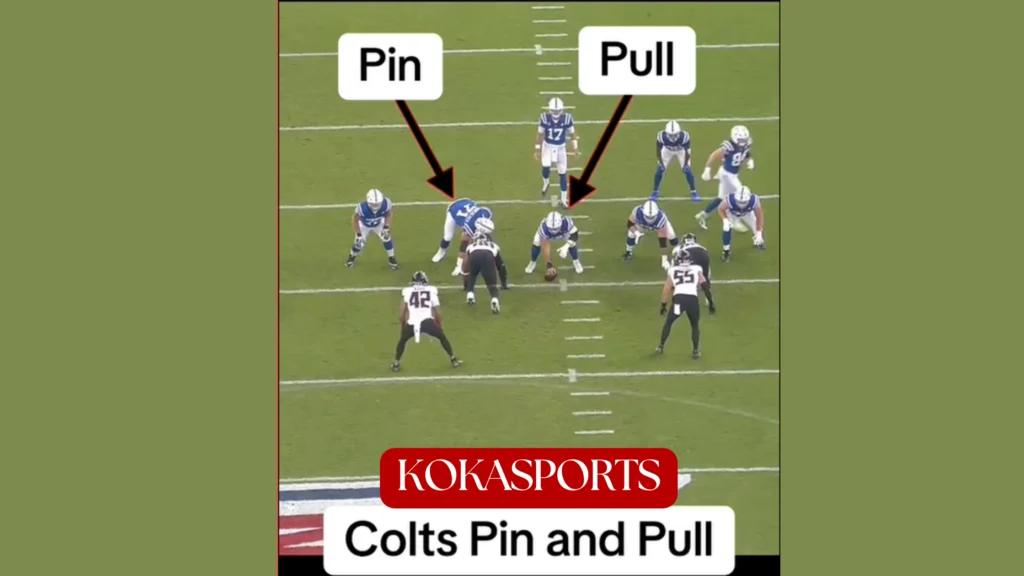
The most successful programs don’t just add pin and pull as one random football play. They build their entire run game identity around it. When you commit fully, defenders can’t key on tells because everything looks similar pre-snap.
A typical head coach might install pin and pull as the base outside run, then add complementary concepts like counter, buck sweep, and pin and pull rpo packages. This creates a cohesive system where each play blocks for the other. Defenses that stop one concept get burned by another.
The offensive line learns one fundamental skill set – pin blocking and pulling – then applies it to multiple plays. This repetition makes execution automatic, even against pressure situations in a championship game. The simplicity at the line of scrimmage allows the qb and receivers to focus on their jobs without worrying about blocking breakdowns.
Common Mistakes to Avoid
Even simple schemes have common errors that hurt efficiency. The biggest mistake in running the pin and pull is pullers leaving too early. When the guard pulls before the snap count settles, it creates false start penalties and disrupts timing. The offensive lineman must be patient.
Another frequent problem involves the pin side offensive tackles trying to create movement instead of just sealing their man. The pin block doesn’t require driving the defender backward – just preventing penetration. Young linemen especially need reminding that “pin” means anchor, not attack.
Finally, many teams overcomplicate this simple blocking scheme by adding too many rules and checks. The beauty of pin and pull lies in its simplicity. Keep the base rules clean and trust your players to execute their jobs without overthinking.
Final Thoughts: Why Pin and Pull Dominates
From the front side to the backside, from pass blocking to run the ball, the pin and pull scheme gives offenses at every level a reliable, explosive run play. It works in spread formations and under center. It succeeds with big linemen and small linemen. Whether you’re preparing for coaching in college or installing a youth football playbook, pin and pull deserves a central role in your offense.
The scheme’s versatility explains why football coach staffs keep coming back to it. You can run it from any formation, against any defensive front, with any personnel package. Add rpo concepts, play action, or complementary counters, and you’ve built a complete offense around one simple idea: pin defenders on one side, pull around on the other, and let your athletes make plays.
FAQs
What is a pin pull?
A blocking scheme where linemen on one side pin defenders in place while linemen on the other side pull around to lead block.
What is the difference between pin and pull and buck sweep?
Pin and pull uses one pulling guard while buck sweep uses both guards pulling together to the perimeter.
What is a pull in football?
When an offensive lineman leaves his position and runs laterally to block a defender in a different area.
Is pin and pull a gap or zone?
Gap scheme – each blocker has a specific assigned defender rather than working in zones.