


A clear answer to How Long is a High School Football Game Quarter: a standard high school football game quarter lasts 12 minutes, but the overall real‑world time for a quarter can extend well beyond this due to stoppages like timeouts, penalties, and halftime and a full game typically lasts about 2 to 2.5 hours.
In this article, we’ll break down the length of a high school football quarter and explore how the game clock works. Whether you’re new to high school football or an experienced fan, this will give you a better understanding of the game’s timing.
How Many Minutes is a High School Football Quarter?
In high school football, each quarter is 12 minutes long. This is the standard length set by the National Federation of State High School Associations (NFHS). A total of four quarters make up the entire game, meaning there are 48 minutes of actual play time. However, the clock doesn’t run continuously. There are several stoppages throughout the game that add time to the overall duration.
Why Does the High School Football Clock Stop?
The clock stops for several reasons during a high school football game. These stoppages can make the total time longer than the 48 minutes of play. Here are some common reasons the clock will stop:
- Timeouts: Each team is allowed three timeouts per half, typically lasting 1 minute.
- Incomplete Passes: If a pass is incomplete, the clock stops to reset the next play.
- Out of Bounds: When a player runs out of bounds, the clock stops to reposition the ball.
- Penalties: The clock stops during penalty enforcement.
- Injuries: The clock stops to allow medical personnel to attend to injured players.
- Touchdowns/Field Goals: After a score, the clock stops for the extra point attempt or kickoff.
These stoppages result in each quarter taking 15-20 minutes in real time.
The Mercy Rule: Running Clock in High School Football
In many states (like Arizona), a “Mercy Rule“ is implemented when one team leads by 35 or 42 points in the second half. Under this rule, the clock continues to run continuously, even during incomplete passes or out-of-bounds plays. This helps to finish the game faster in a blowout scenario, reducing the time for teams who have already won the game by a large margin.
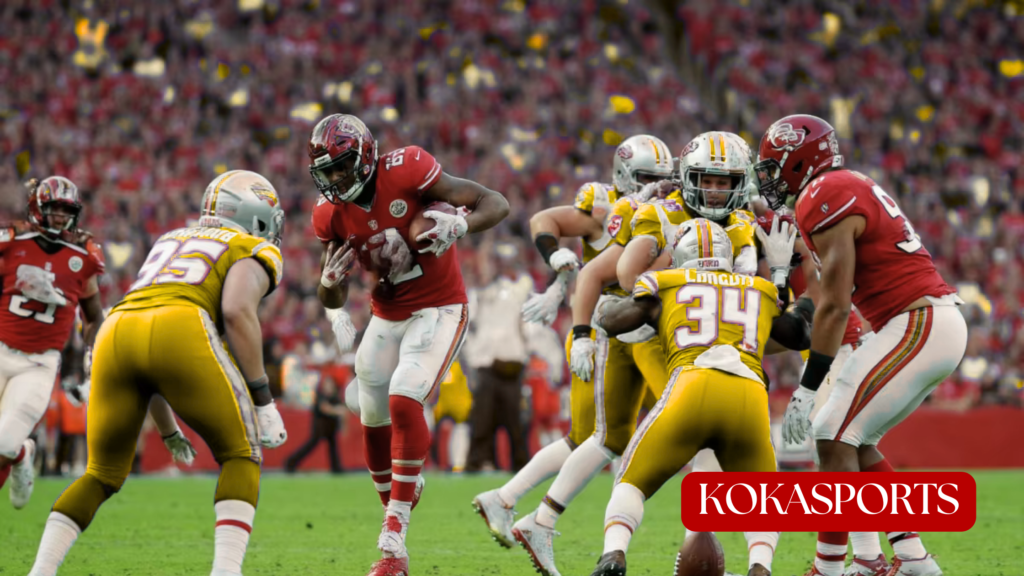
The Mercy Rule ensures that games that are not competitive don’t drag on unnecessarily. The rule is primarily applied to avoid injury and to allow the losing team to finish the game quickly without the additional stress of lengthy play.
Average Total Duration of a High School Football Game
While the total playtime for a high school football game is 48 minutes, the overall duration can range from 2 to 2.5 hours. The time for halftime, timeouts, penalties, and other delays can extend the game’s length significantly.
Breakdown of Game Duration
Here’s a simple breakdown of how the game’s time is typically distributed:
| Event | Time (Minutes) |
|---|---|
| 1st Quarter | 12 |
| 2nd Quarter | 12 |
| Halftime | 15 |
| 3rd Quarter | 12 |
| 4th Quarter | 12 |
| Timeouts, Injuries, Penalties | ~20 |
| Total Time (Estimate) | ~2 hours |
This table gives you a rough idea of how much time each component of the game consumes.
Read More: How Long Does a High School Football Game Last
The Play Clock in High School Football
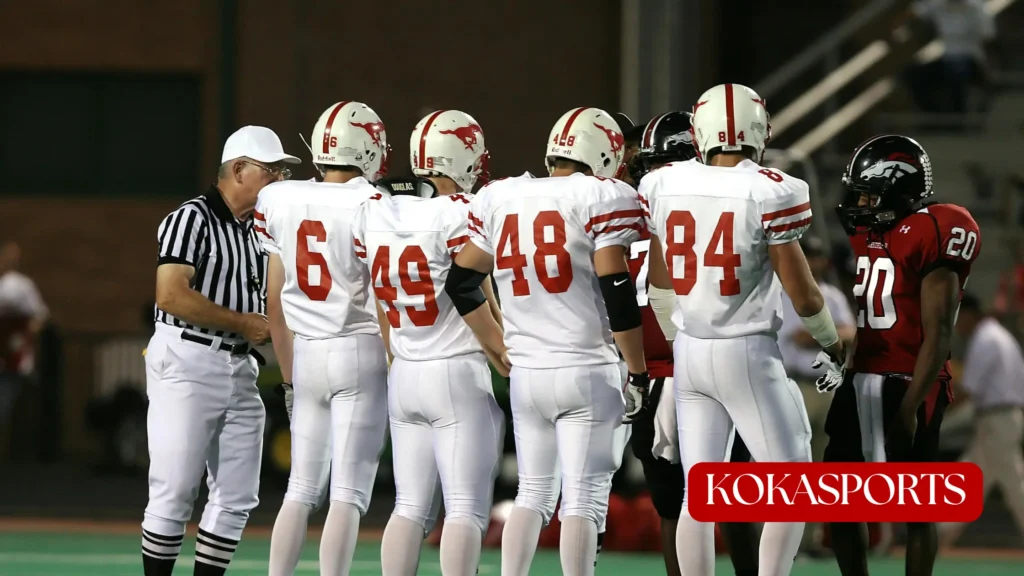
In addition to the game clock, high school football games also feature a play clock, which is often a source of confusion for new fans. The play clock is the amount of time the offense has to run the next play after the previous one ends.
- The play clock is typically 25 or 40 seconds, depending on the situation. If the team takes longer than the allowed time to snap the ball, they will be penalized with a “Delay of Game” penalty.
- The penalty for a Delay of Game stops the game clock and adds additional time to the overall game duration.
The play clock ensures that the game progresses at a reasonable pace and prevents teams from wasting time. If the offense doesn’t start the next play within the designated time, it can slow down the game and increase the overall length.
Comparison: High School vs College and Professional Football
For context, let’s compare high school football to other levels of play:
- High School Football: 12 minutes per quarter.
- College Football (NCAA): 15 minutes per quarter.
- Professional Football (NFL): 15 minutes per quarter.
As you can see, high school football quarters are shorter than those in college and the NFL, which can make for a quicker-paced game. However, high school games often feature more stoppages due to timeouts, penalties, and breaks, leading to longer overall game durations.
Conclusion: High School Football Quarters
In summary, a high school football game quarter lasts 12 minutes, but the total duration of the game is usually between 2 to 2.5 hours. Understanding these details will help you better appreciate the flow of the game and the time commitment involved. Whether you’re attending a game at Gilbert High School or Basha High School in Arizona, or anywhere else, the timing rules are set by the NFHS and apply uniformly across the country.
By knowing the structure of the game, the impact of stoppages, and special rules like the Mercy Rule and the play clock, you can be better prepared for the next high school football event you attend.
FAQs
How long is each quarter in a high school football game?
Each quarter in a high school football game lasts 12 minutes.
What factors affect the length of a high school football game?
Timeouts, penalties, injuries, and halftime breaks all contribute to the total game length, often extending the 48 minutes of play.
Does the clock run continuously during a high school football game?
No, the clock stops for various reasons, such as timeouts, incomplete passes, and penalties. However, during blowouts, the Mercy Rule may trigger a running clock.
How long is halftime in a high school football game?
Halftime typically lasts 15 minutes in a high school football game, but it can sometimes be extended for special events.
What is the Mercy Rule in high school football?
The Mercy Rule is applied when a team leads by 35 or 42 points, causing the clock to run continuously in the second half, even during stoppages.