

The go route football is one of the most exciting plays in all of american football. It is simple, fast, and deadly. When a receiver runs straight down the field at full speed, the whole stadium holds its breath. Will the quarterback launch the ball deep? Can the receiver outrun the cornerback? Will it end in a touchdown?
This guide breaks down everything you need to know about the go route from how it works, to how defenses stop it, to why it changes every game it is used in.
What Is the Go Route Football?
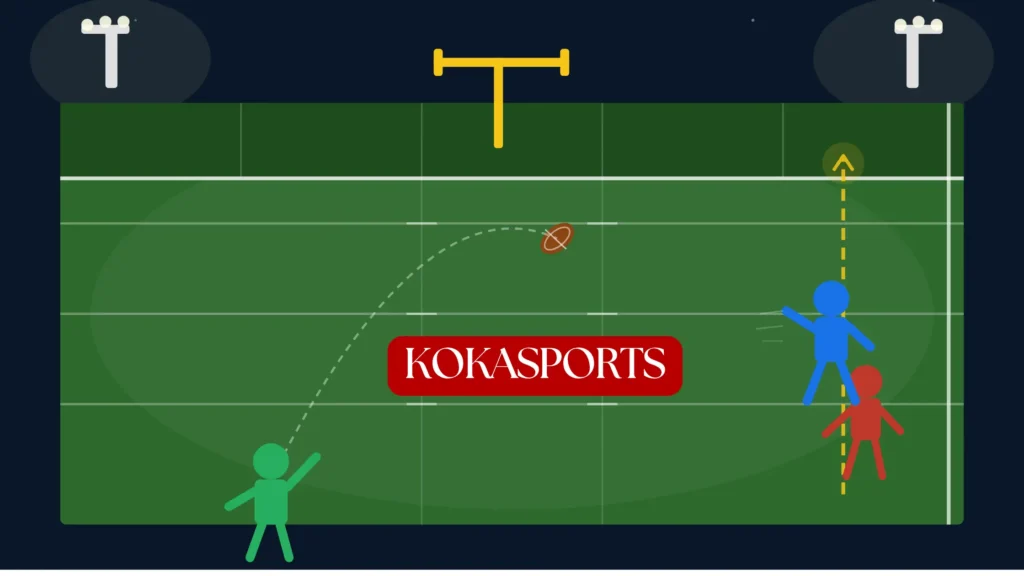
The go route is a passing route where the receiver runs straight downfield as fast as possible. There are no cuts, no fakes, and no turns. The goal is pure speed. The receiver tries to get past the defender and catch a deep throw from the quarterback.
It is also called the “fly route” or “streak route.” In the route tree, it is listed as Route 9 the highest number because it is the deepest and most vertical of all routes.
Here is how the go route compares to other routes in the route tree:
| Route Name | Route Number | Direction | Depth |
|---|---|---|---|
| Flat Route | 1 | Horizontal, short | 1–3 yards |
| Slant Route | 2 | Diagonal inside | 3–5 yards |
| Comeback Route | 3 | Out then back | 10–14 yards |
| Curl Route | 4 | Up then curl back | 8–12 yards |
| Out Route | 5 | Up then outside | 8–10 yards |
| Dig Route | 6 | Up then inside | 10–15 yards |
| Post Route | 7 | Up then inside deep | 15–20 yards |
| Corner Route | 8 | Up then diagonal outside | 15–20 yards |
| Go Route | 9 | Straight up | 20+ yards |
The go route is the longest and most aggressive route in the entire system. Every other route on this list is shorter and uses cuts or turns. The go route does not. The receiver runs straight and trusts their speed.
How the Go Route Football Works : Step by Step
Football coaches teach the go route as one of the first routes because the path is simple. But running it well is very hard. Here is how a well-run go route looks from start to finish.
The Alignment
The outside receiver usually lines up near the sideline. This placement is important because the sideline acts like an extra defender. It limits where the cornerback can push the receiver and gives the quarterback a clear target area.
The Release
At the line of scrimmage, the receiver must beat the cornerback immediately. If the cornerback is playing press coverage (standing right in front of the receiver), the receiver needs a strong release move. This means using a quick shoulder fake or a hard step inside before exploding outside and going vertical.
The first three steps of the release decide whether the go route will work or fail.
The Run
Once the receiver is past the defender, they run vertically upfield at top speed. There are no breaks or cuts. The goal is to outrun the coverage and create open space deep down the field. A receiver that can outrun a cornerback by even half a step gives the quarterback everything he needs.
The Catch
The quarterback throws the ball deep and slightly away from the defender. The receiver must track the ball over their shoulder while still running at full speed. The ability to catch the ball at this speed, while looking up, is one of the hardest skills in all of football.
Why the Go Route Football Is So Important for the Offense
The go route does more than just produce big plays. It controls how the entire offense functions. Here is why.
It Stretches the Defense Vertically
When a receiver is a real deep threat, defenders cannot crowd the line of scrimmage. They have to respect the deep ball. This opens up space for running backs, tight end routes, and short passes underneath.
“You have to respect the deep ball. Once a team has a receiver who can take the top off a defense, everything else opens up.” Common NFL coaching philosophy
It Creates Mismatches
If a fast receiver lines up against a slower defensive back, football coaches will call the go route immediately. They design plays specifically to get that match-up and then attack it with a go route. Teams with elite speed at the receiver position use this strategy every week.
It Works Against Many Coverages
- Cover 3: The go route attacks the deep outside third, where only one defender is responsible for a huge area
- Cover 2: The receiver aims for the deep half behind the cornerback who is forced to stay near the sideline
- Man coverage: With enough speed, the receiver simply tries to outrun their defender
The Go Route vs Other Key Routes

The go route does not work alone. It works as part of a bigger plan. Here is how it connects with other routes.
Go Route vs Corner Route
The corner route and go route use almost the same starting path. The receiver takes three steps upfield hard and then on the corner route they cut diagonally toward the outside of the end zone. On the go route, there is no cut. The defender cannot always tell the difference early, which makes both routes more dangerous when used together.
Go Route vs Post Route
The post route also starts like a go route but cuts toward the middle of the field at an angle. When a defense over-covers the go route, the post route punishes them. When a defense plays the middle of the field aggressively, the go route attacks the outside. Smart quarterback play means reading the defense and choosing between these two.
Go Route vs Fade Route
Near the goal line and in the red zone, the go route becomes a fade route. Instead of a long deep throw, the quarterback throws a soft, arcing ball to the back corner of the end zone. The receiver uses body control and positioning to beat the defensive back to the spot. The fade route is essentially a short-distance go route designed for scoring.
Famous Go Route Moments in Football History
Some of the greatest plays in the history of the gridiron have come from the go route.
Tyreek Hill : The Deep Ball King
Tyreek Hill made the go route his signature play during his years with the Kansas City Chiefs. With a 40-yard dash time of 4.29 seconds, he could simply outrun almost every defensive back in the NFL. His combination of a quick release, elite acceleration, and sure hands made him impossible to cover deep.
Key Tyreek Hill go route stats (2018 season):
| Stat | Number |
|---|---|
| Targets 20+ yards downfield | 31 |
| Touchdowns on deep routes | 6 |
| Average depth of target | 17.3 yards |
DeSean Jackson : The Sideline Burner
DeSean Jackson is one of the most dangerous deep receivers in NFL history. He had a unique ability to track the ball while at full speed and always seemed to find open space near the sidelines. His go routes were not just physically impressive they were technically perfect.
How Defenses Try to Stop the Go Route
Stopping the go route is one of the hardest jobs in football. Here are the main methods defenses use.
Press Coverage The cornerback lines up right on the receiver and tries to disrupt the route immediately. By jamming the receiver at the line, the defender kills the timing of the pass and forces the quarterback to hold the ball longer.
Safety Help Most defenses use a safety to provide help over the top. A single-high safety in the middle of the field can chase down a go route from either side. In two-high shells, the deep defenders split the field and take away the long ball.
Cover 3 Rotation In cover 3, three defenders share the deep zones. The cornerback near the sideline takes the outside third. This makes the go route harder because the receiver must beat a cornerback who already has a head start in the deep zone.
How to Coach Wide Receiver Routes Including the Go Route
Coaching receiver routes is about much more than just drawing plays on a board. It takes patience, repetition, and a clear system that builds from simple to complex. The go route may look easy the receiver runs straight but getting to the point where a receiver runs it effectively takes weeks of dedicated work.
The Fundamentals of Coaching Wide Receiver Routes
Before any receiver can run a go route well, they must master the basics. Here is where every good coaching plan starts:
- Stance and alignment Teach receivers how to line up correctly based on the formation and coverage they expect
- Release technique Every route starts with a clean release off the line. This is the single most important skill a receiver can develop
- Route precision A route run two yards short or two yards inside can kill a play entirely. Precision matters more than speed at early stages
- Short before long Receivers must master the slant, flat route, drag route, and curl route before they ever work on deep routes like the go route
- Reading coverage Teach receivers to identify man vs. zone coverage before the snap so they know how to adjust their release and path
“You build the route tree from the bottom up. A receiver who cannot run a crisp slant has no business trying to beat a cornerback on a go route.” Common receiver coaching principle
Coaching Each Route Type Step by Step
Good coaches follow a clear progression when teaching various routes to their receivers. Here is how that typically looks:
Short and Quick Routes First:
- The slant route teaches the receiver to take three steps upfield then cut sharply inside at 45 degrees. It is one of the best routes to teach timing with the quarterback
- The flat route sends the receiver toward the sideline quickly, usually only a few yards behind the line of scrimmage. Great for quick game situations
- The drag route a shallow crossing route that teaches the receiver to run across the field at low depth and find open space
- The curl route the receiver runs upfield then curls back toward the quarterback. Teaches body control and the ability to get open against zone coverage
Intermediate Routes Next:
- The crossing route receiver runs horizontally toward the middle at medium depth. Teaches receivers to run through traffic
- The dig route receiver runs upfield then breaks hard inside at 10–15 yards. One of the hardest routes to defend in the west coast offense
- The comeback route receiver runs deep then comes back toward the sideline. Teaches precise footwork and sharp cuts
- The pivot route a quick in-and-out move that creates separation in tight spaces
Deep Routes Last:
- The corner route receiver goes deep then breaks diagonally toward the back corner of the end zone
- The post route receiver goes deep then breaks inside toward the goalpost
- The go route the final and deepest route in the progression. Once a receiver has mastered everything below, the go route becomes a natural extension of their skill set
Specific Drills for Coaching the Go Route
Once a receiver is ready to work on the go route specifically, these drills produce the best results:
- Release ladder drill Set up cones at the line of scrimmage and practice inside and outside releases at full speed against a coach holding a pad
- Over-the-shoulder tracking drill Quarterback or coach throws deep balls while the receiver runs away at full speed, practicing looking back and adjusting to the ball
- Sideline boundary drill Run the go route along the sideline marker repeatedly so the receiver learns to stay in bounds naturally without thinking about it
- JUGS machine deep ball drill Use a passing machine to fire deep balls at various angles so the receiver practices catching at full speed without a live quarterback
- Film study sessions Show receivers footage of how cornerbacks align and what that tells them about where to run their release on the go route
Common Coaching Mistakes When Teaching Routes
Even experienced coaches make these errors when building a receiver’s route running skills:
| Mistake | Why It Hurts |
|---|---|
| Teaching the go route too early | Receiver lacks the release technique to beat press coverage |
| Focusing only on speed | Slow receivers can still run great go routes with the right technique |
| Skipping film study | Receivers miss coverage cues that tell them how to adjust |
| Not enough contested catch reps | Go route catches are often contested receivers must practice this |
| Ignoring the short passing route | If a receiver cannot run a short route well, defenses will not respect them at all depths |
Rarest Play Calls in Football Offenses
Not every play in football is called every week. Some plays are so unusual and so risky that teams save them for the most critical moments or never use them at all.
What Is the Rarest Play Call in Football?
Here are the rarest play calls you will ever see on the gridiron:
1. The Hide Play (Annexation of Puerto Rico) This is considered one of the rarest plays in football. An eligible receiver usually a lineman who reports as eligible quietly lines up near the sideline and stays very still while the defense sets up. When the ball is snapped, they slip into open space completely uncovered. It works because defenders simply do not notice them.
2. The Fumblerooski A deliberately hidden fumble where the quarterback places the ball on the ground and a lineman picks it up and runs. This play is now banned at most levels of football but was famously used in college football by Nebraska.
3. The Flea Flicker The quarterback hands off to a running back, who then pitches it back to the quarterback, who throws it deep downfield. The play is designed to freeze the safety by making the defense think it is a run. When it works, it often produces a big play touchdown.
4. The Double Reverse Pass The ball is handed off twice before a forward pass is thrown. This play requires perfect timing and is extremely difficult to execute. Most teams only carry one or two of these in their entire playbook.
5. The Hook and Lateral A receiver catches a short route pass and immediately pitches the ball sideways to a teammate running behind them. The goal is to catch the defense over-pursuing and create a big play in open space.
Here is a quick comparison of these rare plays:
| Play Name | How Rare | Risk Level | Last Famous Use |
|---|---|---|---|
| Hide Play | Extremely rare | Medium | Occasional in college |
| Fumblerooski | Almost never | Very High | Banned in most levels |
| Flea Flicker | Rare | High | NFL several times per season |
| Double Reverse Pass | Very rare | Very High | College and NFL playoffs |
| Hook and Lateral | Rare | High | NFL desperation situations |
Where the Go Route Fits Among Rare Deep Play Calls
The go route itself is not a rare play call teams use it every single week. But a perfectly executed go route touchdown is statistically one of the hardest plays to convert in football.
- NFL completion rate on passes 20+ yards downfield: only 35–40%
- This means more than half of all deep go route attempts fall incomplete
- When you factor in contested catches, tight coverage, and pass rush pressure, a successful deep go route touchdown is genuinely uncommon
This is exactly what makes it so thrilling every time it works.
Quick Reference: Key Go Route Facts
| Fact | Detail |
|---|---|
| Route Tree Number | 9 |
| Average Depth | 20+ yards |
| Best Coverage to Attack | Cover 3, Man Coverage |
| Hardest Coverage to Beat | Cover 2, Press with Safety Help |
| Key Physical Trait | Top-end speed |
| Key Technical Trait | Clean release at the line |
| Common Red Zone Version | Fade Route |
| Related Routes | Corner route, post route |
| NFL Completion Rate (20+ yards) | 35–40% |
FAQs
What is a go route in football?
A go route is when a receiver runs straight downfield at full speed to catch a deep pass from the quarterback.
What is a “route tree” in football?
A route tree is a numbered system (1–9) that organizes all the passing routes a receiver can run in football.
Why is it called a go route?
It’s called a go route because the receiver simply “goes” running straight ahead with no cuts or turns.
Who is the CEO of GoRoute?
The CEO and Founder of GoRout is Mike Rolih.
Conclusion
The go route is the purest and most powerful play in football. It demands speed, courage, and perfect execution from both the receiver and the quarterback. When it works, it changes the game instantly. When a receiver runs it perfectly beating the cornerback, tracking the ball, and making the catch near the sideline it is one of the most beautiful plays in sports.
But the go route is about more than just the single play. It controls the whole game. It forces defenses to play deeper. It opens up the slant route, flat route, comeback route, curl route, crossing route, dig route, pivot route, and every other shorter route underneath. It turns a good offense into a great one.
Every wide receiver position player dreams of being a legitimate go route threat. And every defense fears the receiver who truly has the speed and skill to run it perfectly. From the first coaching drill at the line of scrimmage to the most famous touchdowns in NFL history, the go route remains the ultimate weapon on the football field.