
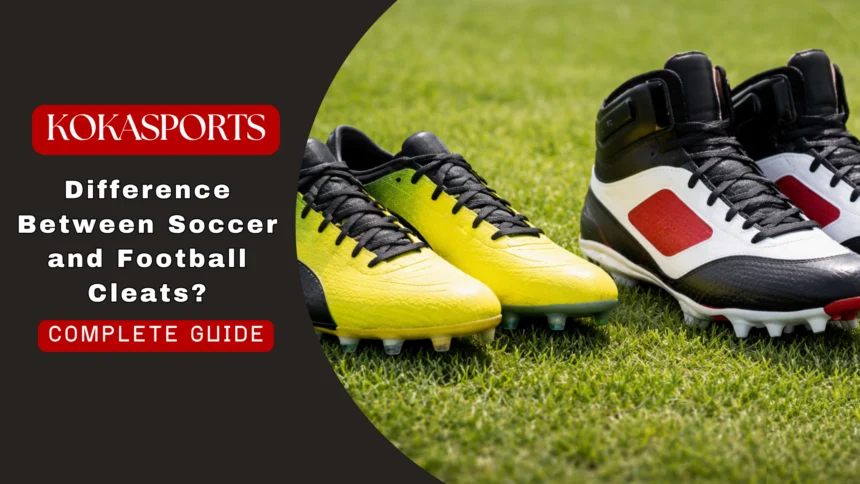
If you play sports, you already know that the right equipment makes a big difference. One of the most confusing choices for athletes and parents is picking the correct pair of cleats. Cleats may look similar at first glance, but they are actually built very differently depending on the sport. Understanding the difference between soccer and football cleats can save you money, prevent injuries, and improve your performance on the field.
This guide breaks everything down in simple language so you can make the best choice.
What’s the Difference Between Soccer and Football Cleats?
At first look, cleats may look almost identical. Both have a hard sole with studs on the bottom. Both are worn on grass or turf. But once you look closer, the differences between soccer cleats and football cleats become very clear.
Soccer cleats are designed to help players run long distances, change direction quickly, and feel the ball through their foot. Football cleats are designed for short explosive bursts, physical contact, and strong ankle support. These two sports demand very different movements, so the cleats are built differently from the ground up.
“The wrong cleat on the wrong field is like wearing dress shoes to a race you’ll survive, but you won’t perform.” Common coaching advice
How Soccer Cleats Are Built
A soccer cleat is all about speed, touch, and movement. Soccer cleats are lightweight and sit low on the ankle. This gives the soccer player full range of motion to sprint, pass, and shoot without restriction. Soccer cleats are built with a slim, tight upper so the foot stays close to the ball at all times.
Soccer cleats prioritize three main things:
- Low weight less mass on the foot means faster movement
- Ball feel thin upper materials keep you connected to the ball
- 360-degree movement the stud layout supports running in all directions
Soccer cleats are usually made with either leather or synthetic material on top. The sole is flexible, which helps during long periods of running. Soccer cleats feature a flat, low-profile design that works well across a soccer field with no interruption.
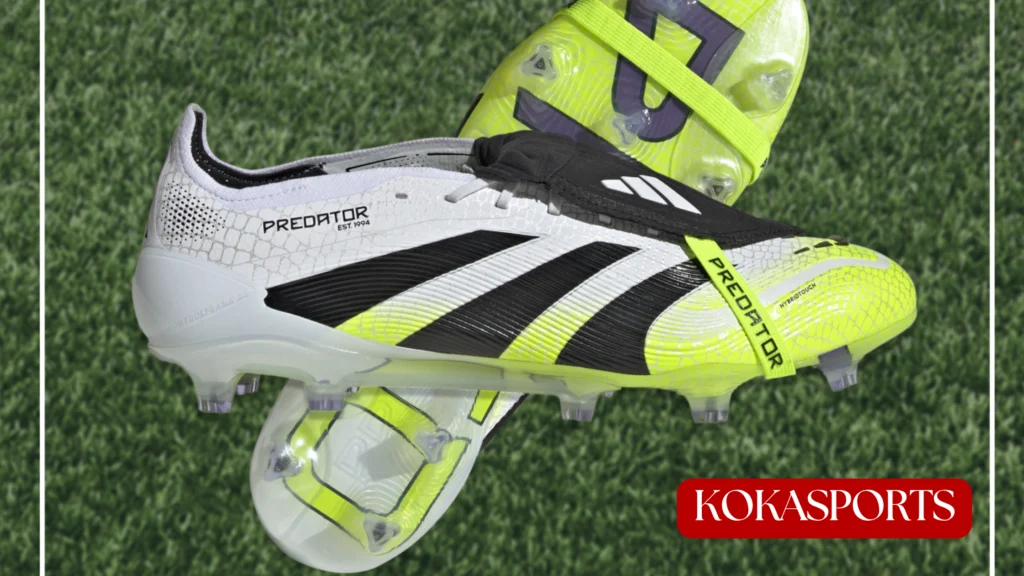
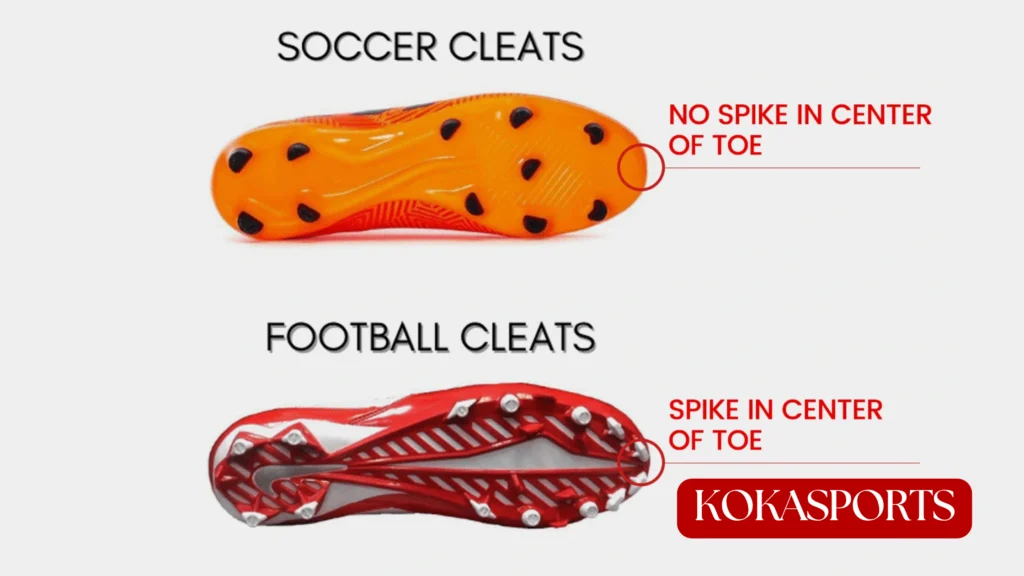
One very important thing to know: soccer cleats don’t have a toe stud. The studs on the bottom of a soccer cleat are arranged in a circle or scattered pattern, but there is no extra stud at the very front of the shoe. This is done on purpose a toe stud could accidentally injure another player during a tackle or challenge.
Read More: Are Soccer and Football Cleats the Same? Everything You Need to Know
Common Stud Patterns in Soccer Cleats
| Cleat Type | Surface | Stud Material |
|---|---|---|
| Firm Ground (FG) | Natural grass | Plastic/rubber |
| Soft Ground (SG) | Wet/muddy grass | Metal or plastic |
| Artificial Ground (AG) | Turf | Short rubber studs |
| Indoor/Turf | Hard indoor surfaces | Flat rubber |
How Football Cleats Are Built
A football cleat is built for power and protection. Football cleats are built with extra padding, stronger materials, and more ankle coverage. Football cleats come in three main cuts: low-cut, mid-cut, and high-cut. High-cut cleats give the most ankle support, which is important for football positions like offensive linemen who take heavy hits.
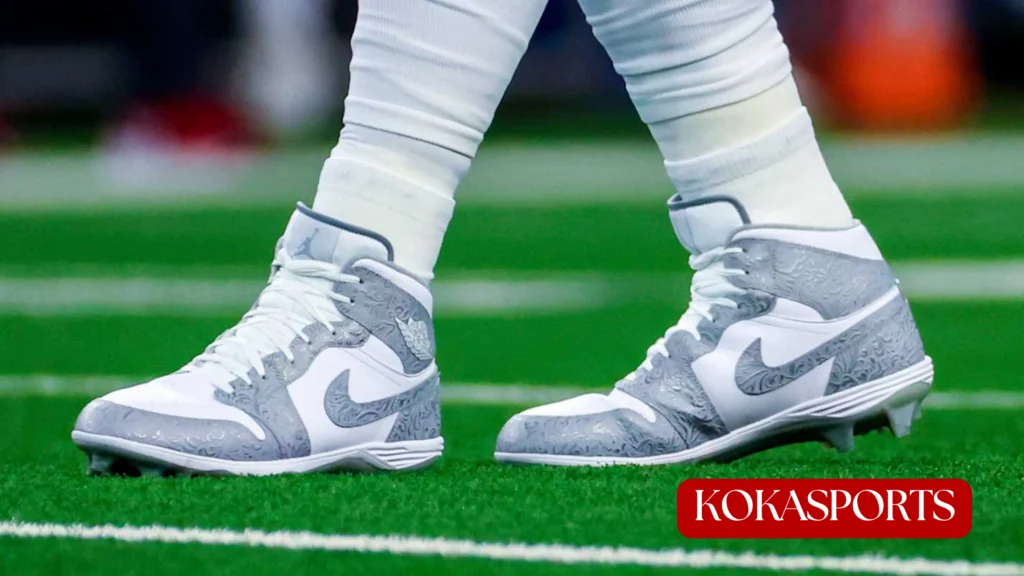
Football cleats often have a toe stud a small extra stud right at the front of the shoe near the big toe. This cleats have a toe stud design helps players push off the ground during explosive starts, like a sprinter using starting blocks. It adds traction and drive during short bursts.
Football cleats are designed with a heavier build because american football is a contact sport. Players wear protective gear, and the cleats need to match that level of toughness. Football cleats tend to be bulkier and heavier than soccer cleats because durability and support matter more than light weight in football games.
Football cleats offer three cut styles:
- High-cut best for linemen, maximum ankle support
- Mid-cut good balance of support and mobility
- Low-cut preferred by skill players like wide receivers and running backs
Key Differences Between Soccer Cleats and Football Cleats
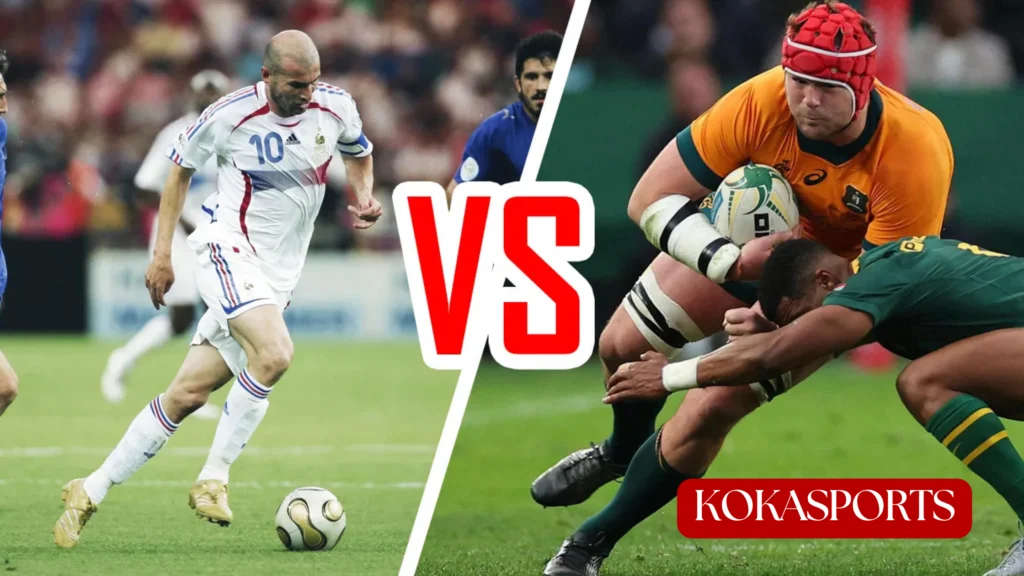
Here is a clear breakdown of the key differences between soccer cleats and football cleats side by side. These key differences will help you make the right decision fast.
Soccer Cleats vs Football Cleats : Full Comparison
| Feature | Soccer Cleat | Football Cleat |
|---|---|---|
| Ankle cut | Always low-cut | Low, mid, or high-cut |
| Toe stud | No | Yes |
| Weight | Very light | Heavier |
| Upper design | Thin, minimal | Padded, protective |
| Sole flexibility | Flexible | Stiffer |
| Main purpose | Running, ball control | Power, contact, support |
| Traction pattern | 360-degree movement | Forward drive focused |
The Toe Stud: The Biggest Difference Between Football and Soccer
The single most important difference between football and soccer footwear is the toe stud. Cleats are usually approved or rejected in leagues based on this one feature alone.
Football cleats may have a prominent toe stud to help with drive off the line of scrimmage. But that same stud is not allowed in soccer because it can cut or injure another player when going in for a tackle. Referees actually check cleats before matches to make sure no illegal footwear is worn.
This is why you should never try to wear football cleats in a competitive soccer match it breaks the rules and puts other players at risk.
Can You Use Soccer Cleats for Football?
This is one of the most common questions athletes ask. The short answer is: it depends.
Soccer cleats work fine in some situations. If you are playing flag football, a recreational game, or a casual pickup match, you can use soccer cleats for football without a big problem. Soccer cleats for football in flag leagues are generally accepted because there is no heavy contact and ankle injuries from collisions are less common.
However, if you play tackle football at any serious level, use soccer cleats with caution. Here is why:
- No toe stud means less drive off the line
- Low-cut design offers zero ankle protection during tackles
- Soccer cleats are usually too thin and light for the punishment of contact football
- Football players need more protection than a soccer cleat provides
Soccer vs football demands are very different, and the cleat reflects that. A soccer player runs up to 7 miles per game. A football player runs in short explosive bursts. These are two completely different physical demands.
Can You Use Football Cleats for Soccer?
Football cleats for soccer is an even worse swap than the other way around. Here is why football cleats and soccer are not interchangeable:
- The toe stud is not allowed in soccer leagues and poses an injury risk
- Football cleats tend to be much heavier, causing fatigue faster
- Football cleats often have a stiffer sole that reduces running efficiency
- Football cleats may look similar but they restrict the foot movement a soccer player needs
Soccer players need to feel the ball, run continuously, and move in every direction. A heavy, stiff football cleat makes all of that harder.
Differences Between Soccer Cleats and Other Sports Cleats
Soccer and football cleats are not the only types out there. Lacrosse cleats, baseball cleats, and rugby cleats also exist and they all have slight differences. Lacrosse cleats, for example, look a lot like football cleats because lacrosse also involves physical contact and quick direction changes. They often have a mid-cut design and a toe stud, which is why cleats aren’t always interchangeable between these sports either.
Two types of cleats that athletes most often mix up are soccer and lacrosse cleats. The key thing to remember is that any cleat with a toe stud is generally not allowed in soccer.
Choosing the Right Cleats for Your Sport
Choosing the right cleats is about matching the cleat to the demands of your sport. Here is a simple guide to help you choose the right option:
For Soccer:
- Pick a low-cut cleat with no toe stud
- Match the stud type to your playing surface (firm ground, soft ground, turf)
- Go for the lightest option you can afford
- Visit a soccer store to try on multiple fits
For Football:
- Choose the cut based on your position (high for linemen, low for skill players)
- Make sure the sole has a toe stud for better drive
- Prioritize ankle support and durability
- American football cleats should have firm, non-slip grip
For Flag Football:
- Either soccer or football cleats can work
- Lightweight is better since there is no contact
- Low-cut design is preferred for speed
These differences before you buy can save you from buying the wrong pair of cleats twice.
Quick Facts: Soccer and Football Cleats
- Soccer cleats are usually 30–50% lighter than football cleats
- Football involves explosive movements that require toe stud traction
- Soccer cleats are designed to protect ball feel, not the ankle
- Cleats are usually low-cut in soccer with no exceptions
- Toe studs are not allowed in soccer at any level of competitive play
- A soccer player can run 7+ miles in a single soccer game
- Always buy soccer gear and football cleats from sport-specific retailers for the best fit advice
Conclusion:
Soccer cleats vs football cleats is not just a style debate it is a performance and safety issue. These cleats for your sport are engineered with very specific needs in mind. Cleats are designed to provide the traction, support, and movement your sport requires. Using the wrong type of cleat will slow you down at best and hurt you at worst.
Soccer cleats tend to be lighter, lower, and built for endurance and touch. Football and soccer cleats share a basic shape but serve completely different purposes. If you need to choose cleats for yourself or your child, always think about the sport first then find the cleat designed for it.
The right pair of cleats on your feet means better performance, fewer injuries, and more confidence every time you step onto the field. Whether you shop at a soccer store or a general sports retailer, now you have all the knowledge you need to make the right call.
FAQs
Are football and soccer cleats the same?
No, football and soccer cleats are not the same. They differ in design, weight, stud pattern, and purpose based on each sport’s needs.
Can my kid wear football cleats for soccer?
No, it’s not recommended. Football cleats often have a toe stud, which is not allowed in soccer and can be unsafe.
What are the differences between soccer cleats?
Soccer cleats differ by surface type (firm ground, soft ground, artificial turf) and materials, affecting traction, comfort, and performance.