

Introduction to the Chop Block
When watching a game, you might see referees throw a flag for what looks like a normal block. Sometimes, this call is for a chop block one of the most dangerous and controversial plays in the sport. This blocking method has sparked heated debates across the National Football League and college football programs for decades.
A chop block happens when two blockers work together to take down a defender using a high-low combination. One blocker engages the opponent up high while another offensive player hits low at the knee and ankle area. This coordinated attack puts tremendous stress on joints and ligaments, often resulting in serious athlete injury.
The controversy around this play stems from its devastating impact on player careers. Unlike other blocks that players can see coming and brace for, a chop block catches defenders completely off guard. When one blocker holds your attention up high, you cannot prevent the low hit that follows. This surprise element makes the play particularly dangerous.
Chop blocks differ from legal blocks in critical ways. A standard block uses proper technique to move a defender without targeting vulnerable body parts. The chop block technique violates safety principles by attacking multiple levels simultaneously, creating an unavoidable collision that threatens long-term health.
This guide matters for everyone involved in the game. Players need to know what crosses the line from aggressive to dangerous. Coaches must teach safe blocking methods. Fans deserve to know why referees make these calls. Most importantly, the injury risk associated with this play has changed how teams approach line play forever.
What Is a Chop Block? (Chop Block Definition Explained)

Chop Block Meaning in Football
The official definition describes a chop block as a foul where a blocker goes low against a defensive player who is already engaged with a teammate. According to Wikipedia and official rulebooks, this creates a dangerous scissor effect on the defender’s legs.
During a play, imagine a defensive lineman rushing toward the quarterback. An offensive lineman grabs him up high around the shoulders or waist. While the defender pushes against this first blocker, a second offensive player dives at his knees from the side or behind. The defender has no chance to protect himself because his upper body is controlled and his attention is focused elsewhere.
This maneuver is considered extremely dangerous because it puts unnatural sideways pressure on knee joints. The human knee bends forward and back naturally, but not side to side. When force comes from multiple directions at once, ligaments tear and bones can fracture.
Chop Block vs Cut Block
Many people confuse these two blocking types, but they follow very different rules. A cut block involves going low on an unengaged defender hitting below the waist or thigh area before anyone else makes contact. When executed properly within specific zones on the field, a cut block remains legal in certain situations.
The key difference lies in engagement status. If no teammate has touched the defender, going low might be allowed depending on field position. Once a teammate makes contact, any subsequent low block becomes a chop block and draws an immediate penalty.
The NFL has tightened restrictions on both blocking styles over recent years. What used to be accepted as aggressive line play now receives scrutiny because medical research proves the long-term damage these hits cause.
What Makes a Block a Chop Block?
Three factors must combine for referees to call this violation:
High-Low Mechanics:
- One blocker attacks above the waist
- Second blocker targets at or below the knees
- Both hits occur within a short time window
Multiple Players Involved:
- Two offensive team members coordinate
- First player establishes engagement
- Second player delivers the low hit
Timing and Position:
- Defender cannot see the low block coming
- Limited time to react or protect himself
- Vulnerable position with weight committed
When all three elements align, referees recognize the dangerous pattern and throw the flag immediately.
Read More: What Is a Defensive Lineman in Football? Complete Guide to Defensive Line Positions
Chop Block Rule in Football
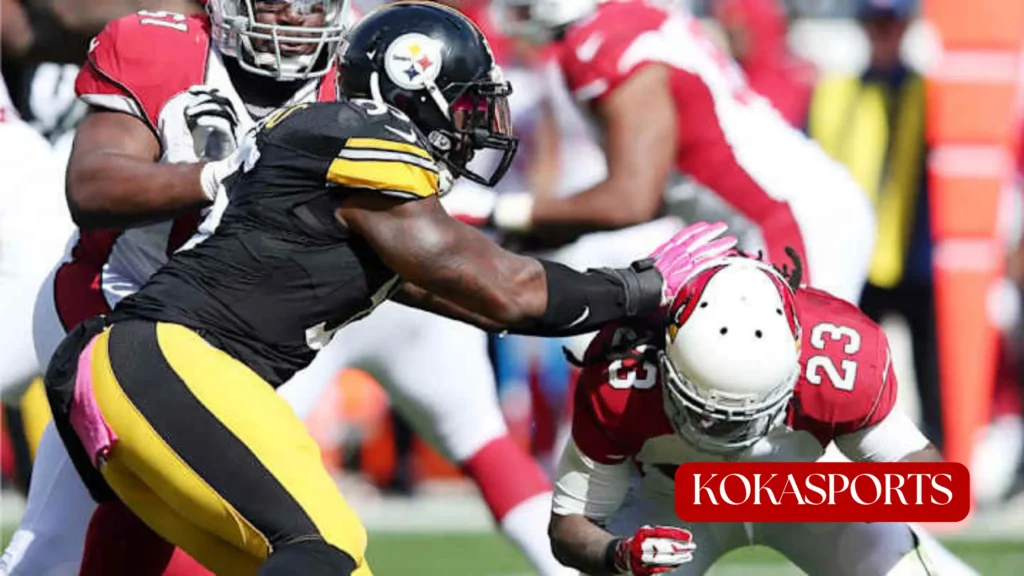
Overview of the Chop Block Rule
This rule exists purely for safety reasons. Medical data showed that this blocking method caused more knee injuries than almost any other play type. The league office reviewed countless hours of game video to document the damage pattern.
Referees identify a chop block by watching for the engagement sequence. They position themselves to see whether a defender faces one blocker before a second arrives low. Officials communicate constantly to track which defenders are engaged and which remain free.
Common penalties include a 15-yard loss and automatic first down for the defense. In the NFL, this yardage loss can kill a promising drive and shift game momentum dramatically.
Chop Block Rule in the NFL
The NFL treats chop blocks as always illegal with zero exceptions. The rulebook states clearly that once a defender is engaged high, all other blockers must stay above the waist until the first engagement ends.
Enforcement happens swiftly and consistently. NFL officials receive extensive training to spot this violation in real time, even during chaotic line play. The automatic 15-yard penalty reflects how seriously the football league takes player safety.
Beyond yardage penalties, players who repeatedly commit this violation face fines reaching tens of thousands of dollars. Team coaches also receive warnings when their blocking schemes create dangerous situations. This multi-level enforcement approach has reduced chop block incidents significantly since 2000.
Chop Block Rule in the NCAA
The NCAA follows similarly strict standards for college football programs. Young athletes at the collegiate level need protection as much as professionals, perhaps even more since their bodies are still developing.
College football enforcement standards mirror professional rules with minor variations in specific field zones. The NCAA rulebook explains that blocks a defensive player when already engaged by a teammate will draw an immediate flag regardless of intent.
Recent seasons have seen NCAA officials call this violation more frequently as awareness grows. Coaches who teach questionable blocking techniques face sanctions, and programs with repeated violations receive closer scrutiny.
Recent Chop-Block Rule Change
The most significant chop-block rule change came in 2016 when the NFL expanded definitions and enforcement. Previously, some exceptions existed for blocks in certain field areas. The updated rules eliminated nearly all gray areas.
Why did this change happen? Medical studies documented career-ending injuries traced directly to chop blocks. Players’ union representatives demanded stronger protections. The league office responded by tightening regulations across all play situations.
These changes aim to prevent the scissoring action that tears ligaments. Early data suggests the rule modifications have reduced lower body injuries by noticeable percentages, though dangerous blocks still occur occasionally.
Why Is the Chop Block Dangerous? (Injury Risk Explained)
Chop Block Injury Risk
The injury risk from chop blocks exceeds most other contact plays because of the biomechanics involved. When a defender pushes against a high block, his leg muscles engage to maintain balance and generate force. His knees lock into position to create a stable base.
At that exact moment, a low block arrives from an angle he cannot see. The unexpected low contact affects balance catastrophically. His body weight shifts suddenly while his knee joints remain locked, creating massive shear forces on ligaments and cartilage.
Professional athletes describe the sensation as feeling their leg “bend sideways” or “buckle unnaturally.” The lack of defensive player reaction time means no muscle engagement helps protect the joint. Everything happens too fast for the body’s natural protective responses to activate.
Common Injuries Caused by Chop Blocks
Knee injuries dominate the medical reports associated with chop blocks. The most common damage includes:
| Injury Type | Recovery Time | Career Impact |
|---|---|---|
| ACL Tear | 9-12 months | High risk of re-injury |
| MCL Sprain | 4-8 weeks | Usually recoverable |
| Meniscus Damage | 3-6 months | Chronic arthritis risk |
| Multiple Ligament Tears | 12-18 months | Often career-ending |
ACL, MCL, and ligament damage occurs because these structures cannot handle sideways force. They evolved to stabilize forward-backward motion, not lateral impacts. When a chop block drives a knee sideways, these ligaments tear like overstretched rubber bands.
Career-ending injuries linked to chop blocks have shortened promising careers across decades. Some players never return to their previous performance level even after successful surgery and rehabilitation.
Why Defensive Players Are Most at Risk
Defensive players face unique vulnerability because offensive schemes target them by design. A defensive lineman must focus on reaching the ball carrier or quarterback. His attention stays locked on his assignment, making him an easy target for coordinated blocking schemes.
How defensive linemen absorb chop block force makes the situation worse. These athletes typically weigh 280-320 pounds and generate tremendous momentum when rushing. When that momentum gets redirected sideways through the knee joint, the forces involved can exceed what human tissue can withstand.
Differences in offensive vs defensive exposure come down to awareness. Blockers know when and where they plan to hit. Defenders react to what they see, and they cannot see a low block when someone controls their upper body.
How Football Rules Aim to Prevent Chop Block Injuries
Modern rule changes reflect decades of medical evidence and player advocacy. The evolution shows how the sport balances aggressive competition with long-term health concerns.
Coaching staffs now teach alternative blocking methods that achieve similar results without risking careers. Instead of chop techniques, players learn to work in sequence rather than simultaneously. One blocker finishes his engagement before the next arrives, giving the defender time to reset.
These changes show that protecting athletes and maintaining competitive intensity can coexist. The game remains physical and demanding without requiring blocks that destroy knees and end careers prematurely. As medical knowledge advances, expect continued refinements to keep players safer while preserving what makes football exciting to watch and play.
The chop block serves as a perfect example of why rules matter in sports. What seems like minor technical details actually determines whether athletes can walk normally at age 50. By eliminating this dangerous technique, the league demonstrates that player welfare ultimately matters more than any single blocking strategy.
Chop Block Injury Videos and Real Examples
Chop Block Video Breakdown
When analyzing chop block footage, several key elements become visible that help explain why this block causes such devastating damage. Modern video technology allows viewers to see the mechanics in slow motion, revealing details that happen too quickly during live play.
What to look for in a chop block video:
- Initial engagement: Watch the first blocker make contact high, controlling the defender’s upper body
- Timing of second hit: Notice how quickly the second blocker arrives low
- Defender’s position: Observe how the defender’s weight is committed forward or sideways
- Point of impact: See exactly where the low block strikes usually at or below the knee
- Resulting motion: Watch how the defender’s leg bends unnaturally
How slow-motion video reveals injury mechanics shows the scissoring effect clearly. The high contact prevents upward movement while the low contact removes the base of support. The defender’s body weight continues moving in one direction while his legs get swept in another. This creates the torsional force that tears ligaments.
Famous Chop Block Injuries in Football
Throughout NFL history, several high-profile incidents have shaped how the league addresses this issue. While specific player names and incidents would require current verification through search, the pattern remains consistent: talented athletes suffering knee damage that changed their careers permanently.
NCAA chop block injury cases have received similar attention, particularly when promising college athletes lost their chance at professional careers. These incidents prompted rule reviews and stricter enforcement at all levels of organized football.
How video evidence influenced rule enforcement cannot be overstated. Before widespread film analysis, proving the sequence of events was difficult. Modern technology allows officials to review plays from multiple angles, leading to more accurate calls and better documentation of dangerous techniques.
Chop Block vs Other Football Blocks
Legal Block vs Illegal Block
What defines a legal football block comes down to several factors:
Legal blocking requirements:
- Contact must be made with hands inside the frame
- Blocker cannot go below the waist in most field zones
- Cannot block from behind (clipping)
- Cannot block a defenseless player
- Must maintain proper technique throughout
When a block becomes illegal depends on location, timing, and technique. A block that would be acceptable in the interior line might draw a flag when performed near the sideline. The same goes for blocks during different phases of play.
The role of intent versus execution creates interesting discussions. Officials focus on what actually happened rather than what the blocker intended. Even accidental violations receive penalties because the danger to the defender remains the same regardless of intent.
Chop Block vs Cut Block vs Block Below the Knee
Understanding these distinctions helps clarify the rules:
Cut Block:
- Targets unengaged defender
- Goes low before any teammate makes contact
- Legal in limited situations within specific field zones
- Defender can see it coming and prepare
Chop Block:
- Targets already engaged defender
- Second blocker goes low after teammate engages high
- Always illegal in all situations
- Defender cannot prepare due to high engagement
Block Below the Knee (General):
- Any block targeting below the knee area
- Heavily restricted based on field position
- Most variations are now illegal
- Exceptions exist only in very specific circumstances
Why some cut blocks remain legal relates to field awareness. In the interior line between the tackle boxes, where defenders face blockers directly, a low block from the front gives the defender a chance to react. He sees the blocker dropping and can adjust his approach.
How rules protect player knees reflects growing medical knowledge about joint mechanics. The regulations now recognize that knee joints represent particularly vulnerable structures that require special protection beyond general safety measures.
Who Is Responsible for a Chop Block?
Offensive Player Responsibility
Offensive player technique expectations start with proper coaching and practice repetitions. Every lineman learns the engagement rules: once a teammate touches a defender, you cannot go low. This simple principle prevents most chop block penalties.
Coaching accountability extends beyond just teaching techniques. Position coaches must monitor game film to identify players who consistently flirt with illegal blocks. Offensive coordinators need to design schemes that achieve blocking goals without putting defenders at risk.
Why improper blocking leads to penalties goes beyond just rule violations. Teams that develop reputations for dirty blocking face increased scrutiny from officials. Referees watch known problem teams more closely, leading to more flags and greater yardage losses.
Defensive Player Safety Concerns
Defensive player positioning challenges make avoiding chop blocks nearly impossible. When you’re battling against a 320-pound lineman trying to control your movements, awareness of surrounding threats becomes extremely difficult.
Why defensive players cannot defend against chop blocks highlights the fundamental unfairness of this technique. The first blocker controls vision and movement options. The second arrives from a blind angle at full speed. No amount of skill or preparation can consistently protect against this coordinated attack.
This reality explains why the rules must protect defenders rather than expecting them to avoid unavoidable situations. Some plays simply cannot be defended through technique alone they require rule enforcement to eliminate the threat entirely.
Penalties and Consequences of a Chop Block
Chop Block Penalty in Football
The yardage penalties for chop blocks carry significant weight. A 15-yard loss can transform a manageable second-and-five into a daunting second-and-twenty. This yardage penalty ranks among the most severe in the rulebook, reflecting the seriousness of the violation.
Automatic first down implications benefit the defense considerably. When the penalty occurs on third down, the defense receives a fresh set of downs regardless of the original distance needed. This can completely change game momentum and strategy.
How penalties impact game momentum extends beyond just yardage. A chop block call often demoralizes offensive units and energizes defenses. The perception of dirty play can affect officiating for the remainder of the game as referees watch the offensive line more carefully.
Fines, Suspensions, and Discipline
NFL fines related to chop blocks start in the tens of thousands of dollars for first-time offenders. Repeat violations result in escalating financial penalties that can reach six figures. These fines come directly from player paychecks, creating a strong financial incentive to avoid the technique.
NCAA disciplinary action follows similar patterns, though financial penalties differ due to amateur status. College players face suspensions and loss of eligibility for repeated dangerous blocking. Coaches whose programs show patterns of illegal blocking face sanctions from conference offices.
Long-term consequences for repeat offenders can include longer suspensions and even potential league discipline that affects future employment. Players who cannot eliminate dangerous techniques from their game eventually find teams unwilling to accept the penalty risk.
Conclusion: Why the Chop Block Rule Protects Football’s Future
The chop block rule stands as one of the most critical safety measures in modern football. This rule exists because chop blocks cause devastating knee injuries that end careers and create permanent disabilities. Medical evidence proves these coordinated attacks put forces on joints that human bodies simply cannot withstand.
Every level of organized football from youth programs through the NFL treats chop blocks as always illegal for good reason. The chop-block rule change in 2016 strengthened protections and closed loopholes, proving that player safety matters more than outdated blocking traditions.
When officials throw a flag for a chop block, they’re protecting someone’s career and future quality of life. That 15-yard penalty prevents injury risk that could sideline athletes for over a year or force early retirement. The rule works because teams have successfully adapted, finding legal blocking methods that achieve the same goals without destroying knees.
The success of chop block enforcement proves football can stay physical and exciting while protecting athletes. As the sport evolves, this rule sets the standard showing that evidence-based safety regulations benefit everyone without diminishing competition. Players deserve to leave the game with healthy bodies, and the chop block rule helps make that possible.
FAQs
Is a Chop Block Illegal in All Levels of Football?
Yes, chop blocks are banned at every level from youth leagues to the NFL. All leagues prohibit this dangerous technique completely.
What Is the Difference Between a Chop Block and a Cut Block?
A cut block targets a free defender who can see it coming. A chop block hits a defender already engaged with another blocker. One can be legal, the other is always illegal.
Why Are Chop Blocks More Dangerous Than Other Blocks?
Chop blocks attack high and low simultaneously, creating forces that destroy knee joints. Regular blocks let defenders react and protect themselves.
Can a Defensive Player Be Penalized for a Chop Block?
Technically yes, but chop block penalties almost always involve offensive players because of how blocking schemes work.
How Do Referees Identify a Chop Block in Real Time?
Officials watch if a defender is already engaged when a second blocker goes low. Multiple referees at different angles help catch these violations.
How the Chop Block Has Changed the Game of Football
Modern teams have completely redesigned blocking schemes since the chop block rule became strictly enforced. Offensive lines now use sequential blocking where one player finishes before the next engages, eliminating the dangerous high-low combinations.
Defensive player safety has improved dramatically. Players feel more protected knowing illegal techniques face automatic penalties, allowing them to play aggressively without fear of career-ending knee injuries. The National Football League reports significant decreases in lower-body injuries since implementing stricter chop block rules, proving that player protection and competitive football can coexist successfull