

Flag football is the ultimate team sport. Every play is built like a machine, with each player doing a job so the whole thing runs. That is true whether you are on offense or defense, and it is especially true in the 7v7 game, where two extra players on each side open up the field and let real strategy take over.
If you are new to the format, this guide breaks down the flag football positions 7v7 teams use, what each player does, and the skills that help you shine. Because 7v7 is a no contact, pass first game, speed and ball skills matter more than size, which means almost anyone can find a spot on the field.
What Makes 7v7 Flag Football Different
In tackle football, teams line up 11 players. In the most popular youth flag format you will see 5 on 5. The 7v7 game sits in between, and it is the version most older youth, high school, and adult leagues play.
The core stays the same. There are no linemen, because there is no blocking. What changes is the number of receivers and defenders on the field. Those extra bodies let offenses run real formations with motion and stacks, and they give defenses enough players to cover the whole field while still bringing pressure. That is why the 7v7 game looks the most like traditional football of any flag format.
According to USA Football’s official 7-on-7 rulebook, the seven offensive players are made up of a center, a quarterback, and five eligible receivers. Two of those receivers must line up on the line of scrimmage at the snap, one on each side of the center. On defense, every player is eligible to rush the passer or drop back into coverage, so roles are flexible from play to play.
Flag Football Positions 7v7 at a Glance
Before we go position by position, here is the quick picture of how a 7v7 team is built.
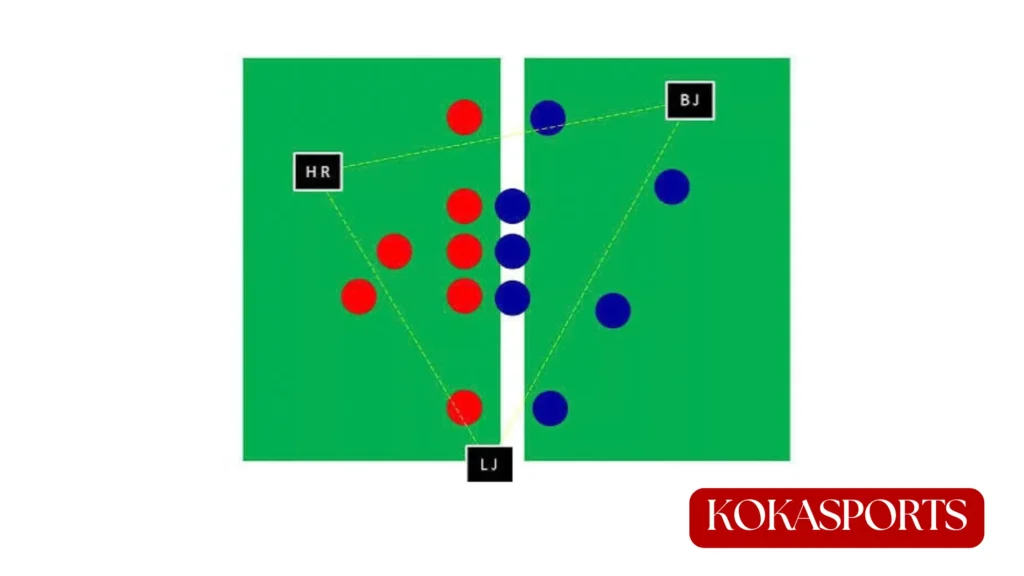
Offense (7 players): Quarterback, Center, and five eligible receivers. Those five receivers are usually split into outside wide receivers, slot receivers, and a running back, depending on the coach’s plan.
Defense (7 players): Cornerbacks and defensive backs, one or two safeties, linebackers, and a rusher. Because everyone can rush or cover, the same athlete may play a different role each snap.
Now let us look at each job.
Offensive Positions in 7v7 Flag Football
The offense has one goal, and that is to move the ball down the field and score. In 7v7 the quarterback has only seven seconds to throw or hand off once the ball is snapped, so quick, smart decisions win games.
Quarterback
Think of the quarterback as the leader of the offense. Every play starts with a snap to the quarterback, who then reads the defense and decides whether to pass or hand the ball off. A quarterback needs good vision, a quick release, accuracy, and the confidence to lead. In 7v7 the quarterback cannot simply run across the line of scrimmage after the snap, so throwing the ball on time is the whole job.
Center
The center snaps the ball to the quarterback to begin the play, and this is the position that changes the most compared to tackle football. The center is the only ineligible player on the field to start the play, but the role still calls for a clean, reliable snap and quick reflexes. Once the snap is away, the center holds position and stays ready to help on defense if the ball changes hands.
Outside Wide Receivers
The outside receivers line up wide and are often the fastest players on the team. Their job is to get behind defenders and catch longer passes, so they usually run deeper routes beyond 10 to 15 yards. These are your game breakers, the players who can flip a game with one big catch. Speed, stamina, and sure hands are what set them apart.
Slot Receivers
Slot receivers line up inside the outside receivers, a step or two off the line. They run shorter, quicker routes across the middle and are built to be shifty and elusive. Their job is to move the chains and keep drives alive, so quickness in and out of cuts and strong hands after the catch matter most. A good slot receiver is hard to cover in tight space.
Running Back
The running back in 7v7 is a very different player from a running back in tackle football. Here the role is mostly about catching passes and giving the quarterback another target, since the game is built on throwing the ball. The running back can still take a handoff, but often lines up as a receiver or a decoy. Quick feet, soft hands, and the ability to fill in wherever the team needs you are the key traits.
Defensive Positions in 7v7 Flag Football
Defense in flag football is about reading the play, staying with your assignment, and pulling flags to end the play. Since there is no tackling, clean flag pulling technique is the skill that ties every defensive position together.
Cornerback and Defensive Back
Cornerbacks and defensive backs cover the receivers and try to break up or intercept passes. They can play man to man or zone depending on the game plan. The best defensive backs are quick, patient, and smart enough to read whether a play is a run or a pass, then react fast to the ball. Keeping a small cushion so you do not get beaten deep is a habit worth building early.
Safety
The safety plays farther back and acts as the last line of defense. Rather than locking onto one receiver, a safety reads the whole field, helps on deep routes, and stops anyone who gets loose. This role rewards instincts and communication, because the safety often directs the rest of the defense and calls out what the offense is showing.
Linebacker
The linebacker is a true 7v7 position, and it is a versatile one. Linebackers line up a few yards off the line in the middle of the field and cover short to intermediate routes, help against the run, and sometimes blitz. Often one linebacker calls the defensive plays and shifts teammates before the snap. If you like being involved on every play and enjoy reading the game, linebacker is a great fit.
Rusher
The rusher goes after the quarterback to break up the pass before it can be thrown. This is the one defensive rule that trips people up, so it is worth stating clearly. Per USA Football’s rulebook, a rusher must line up a minimum of seven yards behind the line of scrimmage at the snap. Teams are not required to rush, and they do not have to declare who the rusher is beforehand. If you have an explosive first step and love pressuring the passer, this is your calling.
How All the Positions Work Together
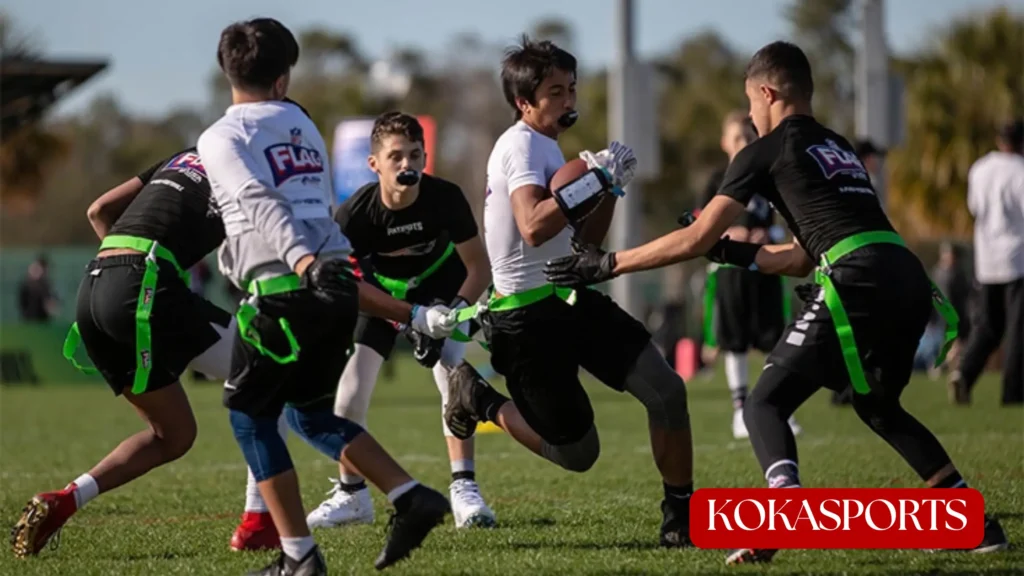
No position works alone in 7v7. The center snaps and clears out, the quarterback reads the field, and the receivers stretch the defense while the running back keeps it honest. On defense, the rusher forces a quick throw while the linebackers, defensive backs, and safety take away the passing lanes.
Because there is no contact and only seven seconds to throw, timing and spacing decide almost everything, which is why the best players learn more than one role. It also helps to know the flag football rules and penalties that shape how each position can play.
What Position Should You Play in 7v7 Flag Football?
The best part of flag football is that there is a spot for every kind of athlete. If you are fast and love running, chase the receiver or defensive back roles. If you have a strong, accurate arm and enjoy leading, quarterback may be for you. If you read the game well and like being in the middle of the action, linebacker or safety will suit you.
Keep in mind that flag football is designed without contact, so the positions are the same for girls and boys, and co-ed play is common across the country. For a deeper look at how each role is coached at the youth level, the NFL FLAG positions guide is a helpful next stop.
Frequently Asked Questions About Flag Football Positions 7v7
How many players are on a 7v7 flag football team?
Each team fields seven players at a time. On offense that is a center, a quarterback, and five eligible receivers. On defense, all seven players are able to rush the passer or drop back into coverage.
What positions are used in 7v7 flag football?
On offense you have a quarterback, a center, outside wide receivers, slot receivers, and a running back. On defense you have cornerbacks and defensive backs, a safety, linebackers, and a rusher.
How far back does the rusher have to line up?
Under USA Football’s 7-on-7 rules, a rusher must start at least seven yards behind the line of scrimmage at the snap. Teams are not required to rush, and they do not have to name their rusher ahead of time.
Can the quarterback run the ball in 7v7 flag football?
Not straight across the line of scrimmage. The quarterback has to hand the ball off first and then receive a handback or a pass before running past the line.
Do 7v7 flag football teams have linebackers?
Yes. Linebacker is one of the roles the extra defenders unlock in 7v7. Linebackers cover short and intermediate routes, help against the run, and sometimes blitz.
Conclusion
Understanding the flag football positions 7v7 teams rely on is the fastest way to enjoy the game and get better at it. The offense runs through the quarterback, the center, and a mix of outside receivers, slot receivers, and a running back, while the defense leans on defensive backs, a safety, linebackers, and a rusher. Because players are always moving and adapting to the play, the most successful athletes learn more than one role. Pick a position that fits your strengths, learn the ones around it, and the game will open up fast.