
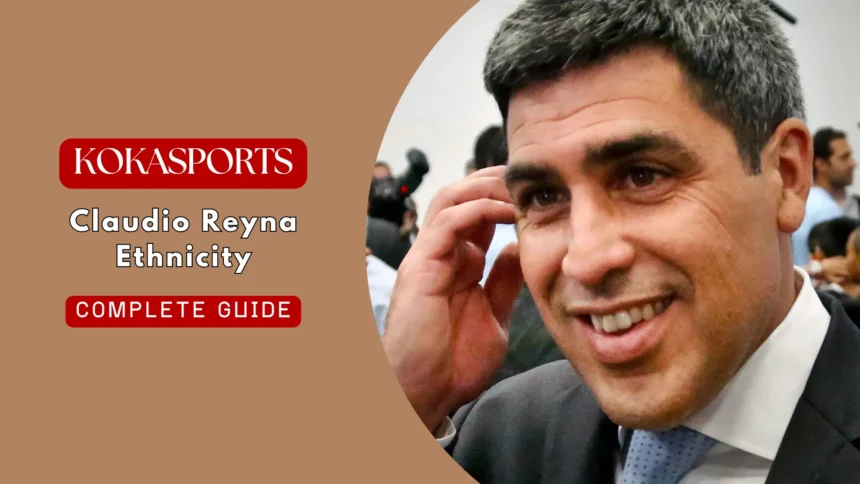
Claudio Reyna ethnicity is Argentine and Portuguese: his father, Miguel, emigrated from Argentina, and his mother, Maria, is Portuguese American. Reyna himself was born in New Jersey, holds American nationality, and captained the United States at the World Cup.
That combination American by birth, Argentine and Portuguese by blood is exactly why the question comes up so often. This article covers his parents, his upbringing, his Spanish, his wife and children, how his heritage passed down to his son Giovanni, and what Claudio is doing today.
What Is Claudio Reyna’s Ethnicity?
He has Argentine ancestry on his father’s side and Portuguese ancestry on his mother’s.
Austin FC’s own club profile, written while he worked there, states it plainly: Reyna is the son of an Argentine father and a Portuguese American mother, and he speaks fluent Spanish plus conversational German. That is about as close to an authoritative source as you will find, because it came from an organisation he worked for rather than a celebrity-bio site.
Now the distinction that trips people up. Ethnicity and nationality are not the same thing. Ethnicity describes ancestry and cultural background. Nationality describes the country you legally belong to. Claudio Reyna’s ancestry is Argentine and Portuguese. His nationality is American, full stop.
You will sometimes see him described simply as “the Argentine-American midfielder,” which is half right and half incomplete. It captures his father’s side and quietly drops his mother’s. Being born and raised in New Jersey did not erase either half.
Beyond Argentine and Portuguese, there is no reliable public information about a more specific ethnic breakdown, and this article is not going to invent one.
Where Was Claudio Reyna Born and Raised?
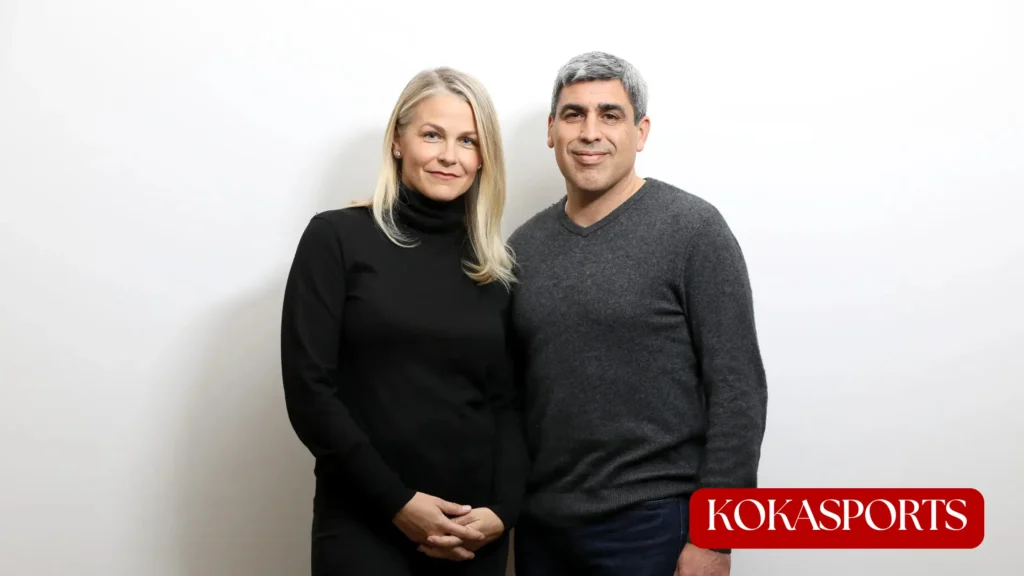
He was born on 20 July 1973 in Livingston, New Jersey, and grew up in Springfield Township.
His father had arrived in the United States from Argentina in 1968 and settled in New Jersey during the 1970s. So Claudio grew up in an immigrant household in a country where, at the time, soccer barely registered. American kids in the seventies and eighties played baseball, basketball and football. Soccer was the odd sport out.
Inside the Reyna house, it was the only sport that mattered.
That gap between what was normal at home and what was normal at school shaped him. He attended St. Benedict’s Preparatory School in Newark, where his team went undefeated for three straight years, and by 1991 he had been named to the U.S. under-17 national team.
Claudio Reyna’s Parents and Family Heritage
Who Was Claudio Reyna’s Dad, Miguel Reyna?
Miguel Reyna was an Argentine footballer before he was an American father.
He came through the youth system at Independiente, one of Argentina’s most decorated clubs, and played professionally for Los Andes. In 1968 he emigrated to the United States, eventually settling in New Jersey.
That background matters more than a line in a biography suggests. Claudio did not learn the game from a suburban American youth coach. He learned it from a man raised inside Argentine football culture, where technique, close control and reading the game are taught before anything else. Claudio has spoken over the years about his father teaching him the game directly.
It shows in how he played. Reyna became a passer and a thinker rather than an athlete who happened to play midfield.
Was Claudio Reyna’s Mother Portuguese?
Yes. Maria Reyna is Portuguese American, and some accounts give her maiden name as Silva.
This is the half of his heritage that most articles skip. Claudio Reyna is not exclusively Argentine, and the Portuguese line is not a footnote it later gave his son Giovanni a Portuguese passport and eligibility to represent Portugal internationally.
Less is publicly documented about Maria than about Miguel, largely because she was not a professional footballer. What is confirmed by club sources is the ancestry itself.
Is Claudio Reyna Argentine or American?
American. But the question is fair, because both answers point at something real.
| Category | Claudio Reyna |
|---|---|
| Birthplace | Livingston, New Jersey, USA |
| Nationality | American |
| Father’s background | Argentine |
| Mother’s background | Portuguese American |
| International team | United States |
| Languages | English, fluent Spanish, conversational German |
He was born in the United States, raised in the United States, and represented the United States from 1994 to 2006, appearing at four World Cups and captaining the side. There is no ambiguity about his sporting nationality.
The Argentine association persists because of his surname, his fluent Spanish and his father’s history. All three are genuine. None of them makes him Argentine by nationality.
Heritage and passport are simply different categories. Plenty of footballers hold one country’s citizenship and another country’s ancestry, and treating those as a contradiction is the mistake.
Does Claudio Reyna Speak Spanish?
Yes. Reyna speaks fluent Spanish, along with conversational German picked up during his years in the Bundesliga.
The Spanish came from home. Growing up with an Argentine father in a Spanish-speaking household meant the language arrived alongside the football, not as a school subject learned later.
It became a genuine professional asset. Reyna spent his career moving between football cultures Germany, Scotland, England and later worked in club administration in Major League Soccer, a league where Spanish is spoken in most dressing rooms. A U.S. captain who could talk football in Spanish was, at the time, unusual.
How Did Claudio Reyna’s Heritage Shape His Career?
Think about what it meant to learn South American football in New Jersey in 1980.
There was no MLS. There was no American soccer culture worth the name. The U.S. had not qualified for a World Cup since 1950 and would not do so again until 1990. A kid who wanted to be a footballer in that environment had almost nothing to copy.
Claudio Reyna had his father. He had Argentine coaching at the dinner table before American soccer had an infrastructure worth the name.
The results speak for themselves. He played professionally from 1994 to 2008, spending time at Bayer Leverkusen, Wolfsburg, Rangers, Sunderland, Manchester City and the New York Red Bulls. According to Austin FC, his Wolfsburg teammates voted him the club’s youngest ever captain, making him the first American-born player to captain a major European team.
For a generation of American players who followed him abroad, he was the proof that it could be done.
Who Is Claudio Reyna’s Wife?
Danielle Reyna, née Egan, whom he married in 1997.
She is a former footballer in her own right, and a serious one she played for the United States women’s national team, making six appearances in 1993. The two met at the University of Virginia, where both played college soccer.
That makes the Reynas one of very few families in which both parents represented their country. Their son Giovanni became the first U.S. World Cup player with two national-team parents.
Danielle’s own family background is reported as Irish American, which differs from Claudio’s Argentine and Portuguese ancestry. Sourcing on this is thinner than for Claudio’s side, so treat it as reported rather than documented. What it does mean is that their children draw ancestry from several directions at once.
Who Are Claudio Reyna’s Children?
Claudio and Danielle have four children: Jack, Giovanni, Joah and Carolina.
Jack, the eldest, was born in 1999 and died of brain cancer in 2012 at the age of thirteen. The family has spoken about him publicly in the years since. He is remembered here because he is part of the family, not because his story is a search term.
Giovanni Reyna
Giovanni is the best-known of the four and the reason most people search for Claudio’s son.
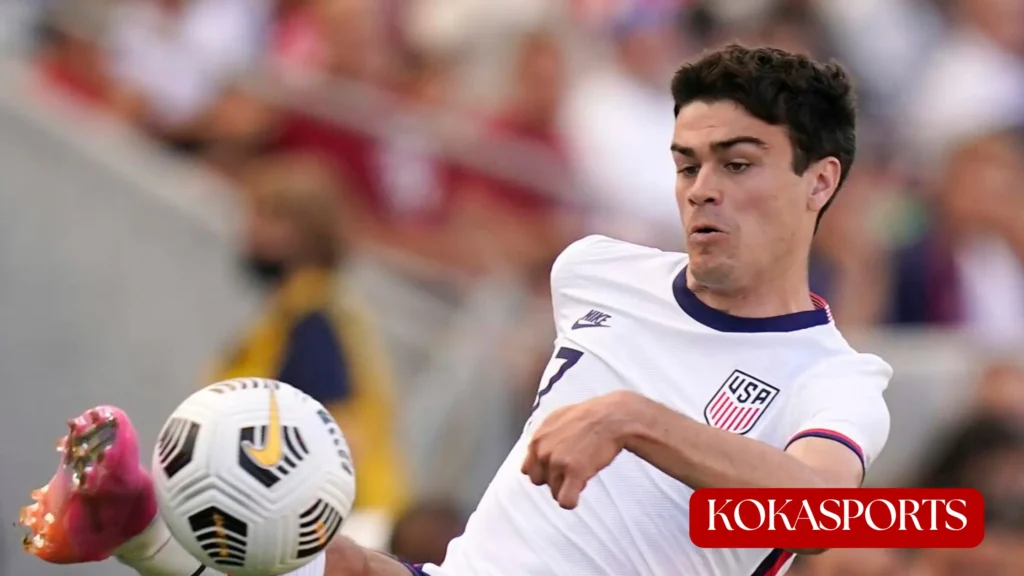
Born in Sunderland, England in 2002 while his father played there, Gio came through New York City FC’s academy before joining Borussia Dortmund in 2019. He has since played for Nottingham Forest on loan and Borussia Mönchengladbach, and in August 2026 he signed for Ligue 1 side RC Strasbourg on a deal running to 2031.
He represented the United States at both the 2022 and 2026 World Cups, scoring in the Americans’ 4-1 win over Paraguay in their opening match of the 2026 tournament. If you are catching up on that competition, our World Cup 2026 fan’s guide covers the teams and format.
Joah and Carolina Reyna
Joah plays college soccer for the Michigan Wolverines. Carolina is the youngest of the four. Beyond that, both keep private lives, and there is no reason to go further.
Claudio Reyna’s Heritage vs Giovanni Reyna’s Options
Here is where the family’s ancestry stopped being trivia and became a genuine football story.
Because of his grandfather Miguel, Giovanni was eligible to represent Argentina. Because of his grandmother Maria, he was eligible for Portugal, and he holds a Portuguese passport. Because he was born in Sunderland, he was eligible for England. And through his parents, he was eligible for the United States.
Four countries. One decision.
He chose the United States, the country both his parents played for. It is worth being clear that this was Giovanni’s choice to make, not an inheritance. Shared ancestry does not mean a shared identity, and a player’s international allegiance belongs to him alone.
Still, the shape of it is striking. Miguel Reyna left Argentina in 1968, and two generations later his grandson could have played for three different national teams because of where the family came from.
What Is Claudio Reyna Doing Now?
He works in football administration, though his role today is quieter than it once was.
After retiring in 2008, Reyna became youth technical director at U.S. Soccer, then sporting director at New York City FC for the club’s first five seasons in MLS. In November 2019 he was hired as Austin FC’s first sporting director, building the expansion club from scratch before its 2021 debut.
That chapter ended in January 2023. Reyna stepped down as sporting director and moved into a technical advisory role, a change that came in the middle of a public dispute involving his family and then-U.S. men’s manager Gregg Berhalter.
The short version: after Giovanni played limited minutes at the 2022 World Cup and Berhalter later described nearly sending an unnamed player home, Danielle Reyna told a U.S. Soccer executive about a 1991 domestic violence incident involving Berhalter. Berhalter alleged blackmail. The Reynas denied it. A U.S. Soccer investigation concluded that Claudio Reyna broke no laws or federation policies, though it raised questions about a club executive advocating for his own son.
He remains listed as an advisor at Austin FC. He has also run the Claudio Reyna Foundation, supporting youth soccer access.
FAQs
What is Claudio Reyna’s ethnicity?
Argentine and Portuguese. His father, Miguel, emigrated from Argentina; his mother, Maria, is Portuguese American. Claudio himself was born in New Jersey and is American by nationality.
Is Claudio Reyna Argentine or American?
American. He was born in Livingston, New Jersey, and played for the United States national team from 1994 to 2006. His Argentine connection is ancestral, through his father, rather than a matter of citizenship.
Who was Claudio Reyna’s dad?
Miguel Reyna, an Argentine footballer who came through Independiente’s youth system and played for Los Andes before emigrating to the United States in 1968. He taught Claudio the game.
Does Claudio Reyna speak Spanish?
Yes, fluently, learned at home from his Argentine father. He also speaks conversational German from his years playing in the Bundesliga with Bayer Leverkusen and Wolfsburg.
Who is Claudio Reyna’s wife?
Danielle Reyna, née Egan, whom he married in 1997. She played for the U.S. women’s national team, making six appearances in 1993. The couple met at the University of Virginia.
Who is Claudio Reyna’s son?
Giovanni Reyna is the best known, a USMNT attacking midfielder who joined RC Strasbourg in 2026. Claudio also has a son, Joah, who plays college soccer at Michigan.
Conclusion: Claudio Reyna Ethnicity in One Answer
To finish where we started: Claudio Reyna’s ethnicity is Argentine and Portuguese, inherited from his father Miguel, who left Argentina in 1968, and his mother Maria, whose family is Portuguese. He was born in New Jersey, raised in New Jersey, and gave his entire international career to the United States.
That is not a contradiction. It is the ordinary shape of an American family one generation removed from somewhere else. The Argentine football his father brought across the Atlantic helped produce one of the best midfielders the United States has ever had and, a generation later, a son with a Portuguese passport who chose the American shirt anyway.