

There’s a different feel around the United States men’s national team heading toward World Cup 2026. Not louder, necessarily. More settled. The talent has been obvious for years, but now some of the players are no longer prospects being discussed in abstract terms. They’re carrying real responsibility at major European clubs, playing meaningful matches every week, and looking increasingly comfortable with it.
International football has a way of exposing uncertainty. Teams can survive a lack of flair for stretches, but hesitation gets punished quickly. The United States still has flaws; every contender does at this stage of the cycle, though the core of this group finally looks experienced enough to navigate difficult moments rather than react emotionally.
When you watch the key players closely, another detail stands out. Several of them are arriving at the right time and age. Not too early. Not already fading physically. Right in the middle of that window, where instinct and confidence start meeting each other.
Christian Pulisic Is Playing Like a Leader, Not Just a Star
Christian Pulisic has carried expectations for so long that people almost forget how young he still is. For years, every conversation around the national team seemed to begin and end with him. Sometimes unfairly.
Now, though, the pressure looks different on him. At AC Milan, Christian Pulisic is playing with greater poise and control, showing the maturity of a player more comfortable dictating moments than forcing them.
He still attacks defenders directly when the space is there, still changes games with quick movements around the box, but there’s less urgency at the wrong moments. Less forcing the spectacular touch because he feels obligated to rescue a match.
That evolution has probably been the biggest development in his game, and it makes him central to the USA World Cup odds. He looks more comfortable choosing his moments in possession, and the attacking end product feels sharper when he is used in roles that suit his game. You notice his clam especially against organized defenses where panic usually creeps into attacking players after long stretches without openings.
Pulisic no longer looks rushed by those stretches. The United States needs goals from him, obviously. It also needs emotional stability in big matches, and that’s where he seems far more complete than he did a few years ago. Younger teammates read off him now. You can see it in transition moments when the tempo suddenly settles after he receives the ball.
Much of the current conversation around the USA’s World Cup odds centres on this exact point. If Pulisic is healthy and playing at this level heading into the tournament, the team’s ceiling changes. Maybe not dramatically overnight. But enough.
Read more: Are Soccer and Football Cleats the Same? Everything You Need to Know
Weston McKennie Still Brings Useful Chaos
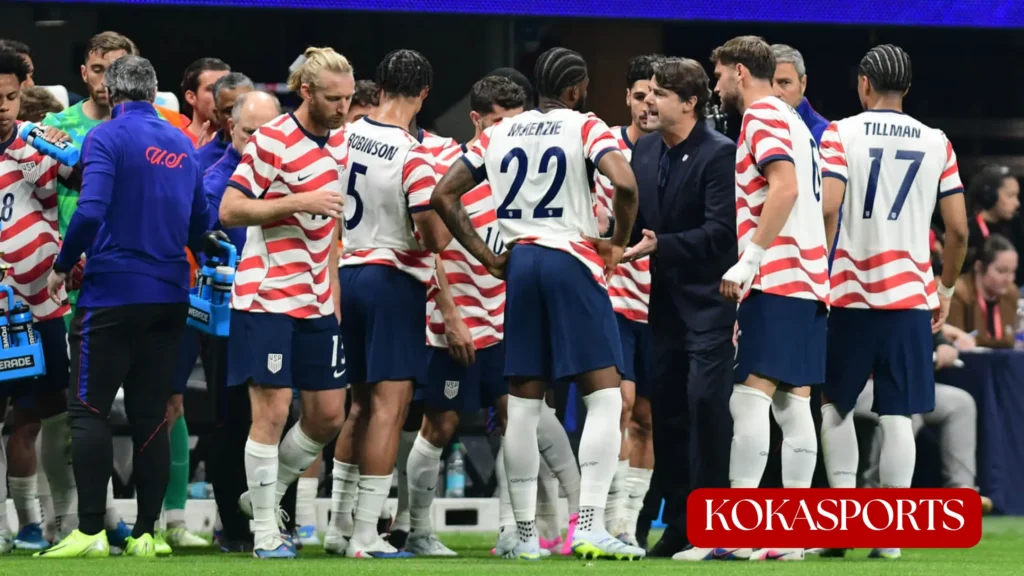
Weston McKennie has never looked like a conventional midfielder, which is part of why he’s so valuable.
Even now, after years in Italy, there’s something slightly unpredictable about the way he plays. One minute, he’s tracking a runner deep into his own half, the next, he’s crashing into the box looking for a header. The game around him speeds up, and he somehow seems more comfortable because of it.
Juventus has leaned on that energy repeatedly. Some midfielders control matches through elegance. McKennie controls them by making opponents uncomfortable. Physical duels. Second balls. Recovery runs that force attacks backwards instead of forward. It wears teams down over ninety minutes, even if it doesn’t always look graceful.
In tournament football, grace can be overrated. The United States now has technical players. That wasn’t always true. What McKennie provides is edge. He changes the emotional temperature of matches by refusing to let the midfield become passive. Sometimes he overextends himself. Sometimes the aggression spills over. Still, coaches trust players like that because the alternative is often a team that fades quietly from games.
He looks more measured in his decision-making now, and that added control has made him more effective in matches where discipline matters as much as intensity. Not constantly, but more than before. That small adjustment has made him more influential in tighter matches where discipline matters as much as intensity.
Tyler Adams Gives the Team Its Shape
When Tyler Adams is missing, the structure of the United States changes immediately. The spaces look wider. Possession becomes less secure. Counterattacks feel more dangerous.
That’s not a coincidence. Adams does a lot of work that’s easy to miss unless you watch him specifically. He shifts passing lanes before the ball arrives. He closes angles early enough to cause opponents problems seeing the pass they wanted two seconds earlier. Those details rarely become highlights, but coaches notice every one of them.
The Bournemouth midfielder also brings a level of calm that the team badly needs. There’s a temptation in international football to mistake constant motion for control. Adams understands tempo differently. Sometimes the smartest thing a defensive midfielder can do is play the uncomplicated pass, reset shape, and let the game breathe for a second.
He does that naturally. Physically, he still covers enormous ground. That part hasn’t changed. What feels different now is the authority he carries in central areas. Teammates respond to his positioning almost instinctively. Defensive communication becomes quicker around him because everyone seems clearer about their assignment.
That clarity matters more than people think during tournaments. Especially against elite teams, where matches can tilt on tiny moments of confusion. One missed rotation. One unnecessary step forward. Adams tends to erase those moments before they become problems.
Antonee Robinson Has Become Difficult to Ignore
For a while, Antonee Robinson was viewed mostly as an athletic fullback who could recover from mistakes because of his speed.
That description feels outdated now. At Fulham, Robinson has developed into one of the Premier League’s more complete left-backs. The pace is still there, of course. Few players cover ground like he does over the course of a match. However, his decision-making has sharpened considerably.
That’s the difference. His timing on overlapping runs looks more natural than it did earlier in his career. He doesn’t attack space blindly anymore. There’s better awareness of when to stay connected to the defensive line and when to stretch the field aggressively.
The partnership with Pulisic on the left side is particularly important for the national team.
Pulisic likes drifting inside into tighter pockets where he can combine quickly around the box. Robinson reads those movements quickly, which helps the United States keep width on the left without making the attack feel too predictable.
Then there’s the defensive side. The United States will face elite wingers in 2026. That’s unavoidable. Robinson’s recovery speed helps, but what stands out more lately is his composure in isolation situations. He looks less reactive now. More patient. He trusts his positioning instead of diving into challenges.
That kind of maturity usually arrives slowly with defenders. Sometimes, almost without people noticing.
Why This Group Feels More Serious
American soccer has produced talented squads before. That part isn’t new.
What feels different about this group is the combination of experience and timing. Pulisic is no longer carrying the burden alone. McKennie understands high-level matches. Adams organizes everything underneath the surface. Robinson looks ready for elite competition every week. Reyna, if healthy, still offers the kind of creativity that changes knockout matches.
There’s depth, too, though depth only matters if the central players hold their own under pressure.
Right now, many of them have what it takes. That doesn’t guarantee anything once the World Cup begins. Football rarely works that neatly. A difficult draw, an injury, one bad half, tournaments can turn quickly. Still, this version of the United States looks more emotionally prepared than earlier cycles, with a steadier core that appears harder to unsettle in difficult moments.
This team feels steadier. Not perfect. Not unstoppable. Just harder to bend out of shape than before, and maybe that’s the clearest sign of progress heading toward 2026.
FAQs
Who is the most important player for the USMNT heading into World Cup 2026?
Christian Pulisic, who now leads with poise rather than forcing moments, raising the team’s ceiling if healthy.
What does Tyler Adams add that doesn’t show up in highlights?
Shape and tempo control he closes passing lanes early and keeps the team’s defensive structure calm and organized.
How has Antonee Robinson’s game evolved?
From a recovery-speed athlete into a complete, composed Premier League left-back whose link-up with Pulisic gives the left side balance.
Conclusion
This version of the United States stands out less for raw talent than for timing and temperament. Pulisic, McKennie, Adams, and Robinson are all hitting their prime in roles that suit them, sharing the weight that once fell on Pulisic alone. Nothing is guaranteed once the tournament begins — a tough draw or an injury can change everything — but a steadier, more experienced core makes this team harder to unsettle than in past cycles. Heading into 2026, that emotional stability may be the clearest sign of genuine progress.