

Football 101 – The Rise of the Slot Receiver
A slot receiver in football is a wide receiver who lines up between the offensive line and the outside receiver, primarily working the middle of the field to create quick separation and exploit defensive mismatches.
In the modern NFL, the wide receiver position has evolved from sideline speedsters to complex chess pieces. Today’s offense demands versatility and intelligence from players who thrive in chaotic traffic between the tackles.
Players like Wes Welker revolutionized the position by proving that quickness, route running, and football IQ could be just as devastating as pure speed. The slot position has become so vital that nearly every successful NFL offense now features a dedicated slot wr who can survive punishment from linebackers and serve as the quarterback’s most reliable target on critical third downs.
This guide will explore what makes the slot receiver in football essential, break down the specific slot receiver skills required for success, and examine why this role has become the cornerstone of modern offenses.
Read Also: What Is the Z Receiver in Football? Complete Guide to the Flanker
What is a Slot Receiver in Football?
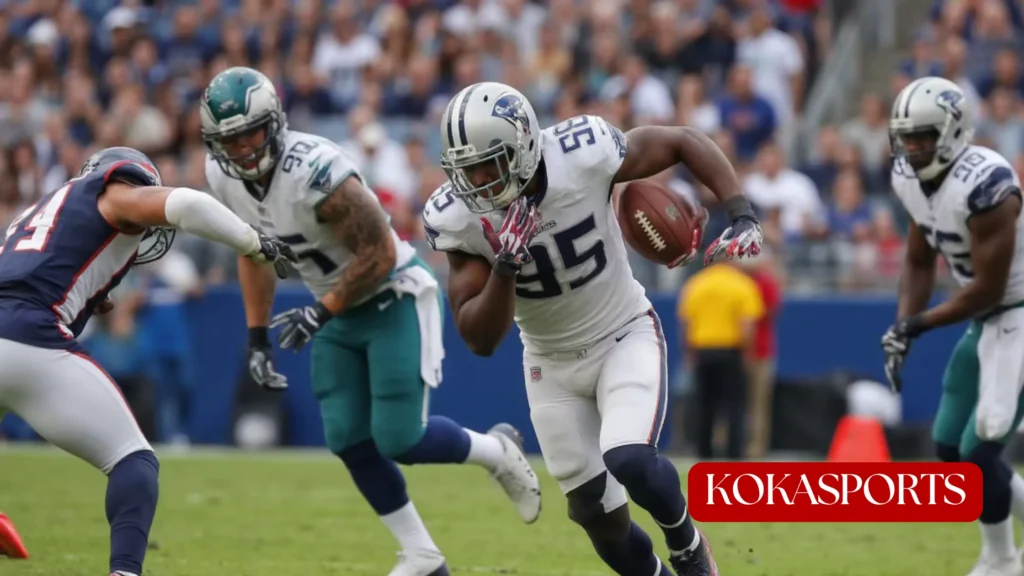
The slot receiver operates from an alignment that positions them inside the outside receivers, typically standing in the gap between the offensive line and the boundary. This placement might seem like a minor detail, but it fundamentally changes everything about how the position is played.
The “slot” refers to the interior spacing of offensive formations. When teams run three wide receivers or 11 personnel (one running back, one tight end, three WRs), at least one receiver must align in this inside position. The slot receivers line up approximately 3-7 yards inside the widest receiver and usually position themselves slightly behind the line of scrimmage, though this varies based on the offensive coordinator’s preferences and the specific play call.
This alignment creates several strategic advantages:
- Access to both sides of the formation: A slot player can break routes toward either sideline or attack vertically up the seam
- Leverage against zone coverage: The slot sits perfectly positioned to find soft spots between zones
- Motion opportunities: Being off the line allows slot guys to go in motion more easily, creating pre-snap confusion
- Natural pick opportunities: The slot wr can use natural traffic from other receiver lines to create separation
The slot position has become so important that nearly every receiver in the NFL must now demonstrate the ability to play in the slot. Even traditional X receivers who primarily work the boundary need slot competency to maximize their value and allow offensive coordinators maximum flexibility in game planning.
Slot Receiver vs Outside Receiver: Differences That Matter
The contrast between slot and outside receivers goes far beyond simple alignment. These are fundamentally different jobs that require distinct skill sets and mental approaches.
Outside receivers work the boundary, operating in a confined space where they have the sideline as both a tool and a limitation. Their primary responsibility involves winning one-on-one matchups against the defense’s best cornerbacks, using their top end speed and big play ability to stretch the field vertically. The traditional X receiver typically faces press coverage at the line of scrimmage and must win with power, length, or explosive acceleration.
Slot receivers, by contrast, navigate the middle of the field traffic. They face a rotating cast of defenders including nickel cornerbacks, safety players, and even linebackers depending on the coverage scheme. This variety of matchups is both an opportunity and a challenge. While slot receivers tend to avoid the opponent’s lockdown cornerback, they must possess the toughness to operate in the “linebacker danger zone” where collisions come from multiple angles.
Key Differences in Approach:
| Aspect | Outside Receiver | Slot Receiver |
|---|---|---|
| Primary Coverage | Top cornerbacks | Nickel corners, safety, linebacker |
| Route Emphasis | Vertical, boundary fade | Short routes, option routes, crossers |
| Physical Demands | Top end speed, leaping ability | Quickness, lateral agility, toughness |
| Space | Limited (sideline boundary) | Expansive (entire middle of the field) |
| Blocking Role | Perimeter blocking on run game | Lead blocking through the hole |
The route tree itself differs dramatically. Outside guys run more “closed” routes nine routes (go), fade routes, comebacks, and out routes that use the boundary. Slot specialists master “open” routes that break toward space: slants, drags, digs, and choice routes where the receiver makes decisions based on coverage reads.
Perhaps most critically, slot receivers must possess good hands in traffic. While outside receivers often catch the ball in space, the slot wr must secure catches while anticipating immediate contact from a defensive back or safety. This requires a different kind of mental toughness the willingness to catch the ball knowing punishment is coming.
Decoding the Alphabet: X, Y, and Z Receivers in the NFL
NFL terminology can confuse even dedicated fans, but the X, Y, and Z designations provide a simple framework for identifying receiver roles in American football.
The X receiver is the “split end” the primary outside receiver who aligns on the line of scrimmage on the weak side of the formation (opposite the tight end). This is typically the team’s best receiver, the one who faces the opponent’s top cornerback and draws the most attention. The traditional X must win contested catches downfield and serve as the primary deep threat.
The Z receiver is the “flanker” the secondary outside receiver positioned on the strong side of the formation. Critically, the Z receiver lines up off the line of scrimmage, which allows them greater freedom to go in motion before the snap. This flexibility makes the Z position ideal for receivers who excel at creating mismatches through pre-snap movement. The Z can swing toward the slot, motion across the formation, or even align in the backfield.
The Y receiver traditionally refers to the tight end, but in modern offenses this designation increasingly applies to the primary slot receiver. When teams deploy three wide receiver sets without a traditional tight end, the inside WR assumes the Y role. This evolution reflects how the receiver position has changed the Y is now less about blocking and more about exploiting the seams and soft spots that only an inside alignment can access.
The X and Z work together to stretch the defense horizontally and vertically, forcing cornerbacks to cover vast areas of the side of the field. Meanwhile, the Y attacks the vulnerable middle, where defenders must balance coverage responsibilities against run support.
Essential Slot Receiver Skills: What Makes Them Different?
To excel as a slot receiver, players need a completely different skill set than their outside counterparts. Raw speed matters less than the specific attributes that allow success in confined, chaotic spaces.
Elite Short-Area Quickness
Lateral agility and change of direction ability trump straight-line speed for slot receivers. While outside receivers might win with a 4.3-second forty-yard dash, a good slot receiver dominates with elite ten-yard splits and three-cone drill times. The ability to get quick separation in a phone booth matters more than being able to get deep.
When the team is blitzing and the quarterback needs a hot read, the slot wr must explode out of breaks instantly. There’s no time to build up speed or settle into routes. Every movement must be sudden, sharp, and decisive.
Fearlessness Over the Middle
Perhaps no quality matters more than the mental toughness to operate in the “kill zone”. Slot receivers catch passes where linebackers and safety players patrol, which means catching the ball while a 230-pound missile approaches at full speed.
This isn’t about being reckless it’s about being reliable when the play demands courage. The best slot receiver maintains focus on securing the catch even when their peripheral vision shows a defender approaching. This ability to catch the ball in traffic separates true slot specialists from outside guys who occasionally align inside.
Football IQ and Route Adjustments
Slot receivers must process defensive coverage faster than any position besides quarterback. Many slot routes feature “option” or “choice” elements where the receiver makes decisions based on coverage reads. Against zone coverage, a slot player might sit in a soft spot between zones. Against man coverage, they might convert a slant into a speed out.
This intelligence extends to recognizing when to become a safety valve. When the offensive line breaks down or receivers downfield are covered, the slot wr must find space and make themselves available as the pressure release. This requires constant awareness of down, distance, and situation.
Blocking Prowess
Great slot receivers take pride in their blocking, particularly on outside runs. When the offense runs sweeps or tosses to the running back, the slot receiver often serves as the lead blocker, engaging cornerbacks or safety players in space. This willingness to block and do it effectively makes the entire run game more efficient and earns trust from offensive linemen and coaches.
Cooper Kupp of the Ram exemplifies this versatility. While known for exceptional receiving skills, Kupp’s blocking on run plays makes Los Angeles’s entire offense more dangerous.
Pioneers of the Position: From Wes Welker to Today
The slot position didn’t always command respect, but a few revolutionary players transformed it into one of football’s most valuable roles.
The Wes Welker Revolution
Wes Welker’s arrival in New England changed how NFL offenses viewed the slot position forever. The Patriot turned Welker from a undersized afterthought into the centerpiece of a record-breaking offense. Welker caught 112 passes in 2007, proving that a shifty, intelligent slot specialist could produce volume that matched or exceeded traditional number-one receivers.
Welker’s success stemmed from perfect alignment between player skills and scheme. His exceptional quickness allowed him to create separation on short routes. His toughness allowed him to absorb punishment over the middle without hesitation. Most importantly, his chemistry with Tom Brady created a nearly automatic connection on third downs that made New England’s offense nearly unstoppable.
Julian Edelman and the New England Dynasty
Julian Edelman carried the torch from Welker, proving the slot wr could be a playoff hero. Edelman’s Super Bowl performances including multiple championship catches in traffic demonstrated that the slot receiver wasn’t just a regular-season stat compiler but a legitimate weapon in football’s biggest moments.
The Modern Power Slot
Today’s NFL has expanded the slot receiver archetype beyond smaller receivers. Players like Cooper Kupp and Justin Jefferson show that the best receiver on a team can operate primarily from the slot. These players combine traditional slot receiver skills quickness, route running, reliability with size and athleticism that create impossible mismatches.
When the Ram motion Kupp into the slot against a linebacker, they create an advantage no defense can solve. This evolution has made the slot position the most versatile and valuable in modern offenses.
Why Every NFL Offense Needs a Great Slot Receiver
The slot receiver has evolved from a situational role into an offensive necessity. Here’s why NFL offenses cannot function optimally without an elite slot presence:
Third Down Dominance
Slot receivers convert third downs at rates that exceed outside receivers. Their ability to run routes at precise depths, sit in zones, and beat man coverage makes them the quarterback’s most reliable target when the chains need to move. The precision timing between quarterback and slot wr creates a nearly automatic connection on crucial downs.
Red Zone Efficiency
Inside the twenty-yard line, defenses compress and the field shrinks. This environment favors the slot receiver, who already specializes in winning in tight spaces. Red zone slot routes the option route, the back-shoulder slant, the quick out become nearly impossible to defend when executed properly. The ability to get quick separation in a confined area makes slot receivers essential for scoring touchdowns rather than settling for field goals.
The Quarterback’s Security Blanket
When pressure comes and the play breaks down, quarterbacks look for their slot receiver. The slot player’s job includes knowing when to abandon the called route and find space, making themselves available as the last resort. This safety valve role prevents sacks, reduces turnovers, and keeps drives alive.
Furthermore, when defenses bring extra rushers, the slot wr often serves as the hot read the quick throw that gets the ball out before pressure arrives. This requires perfect timing and trust, but it transforms potential disasters into positive plays.
Formation Flexibility
A versatile slot receiver unlocks an offense’s entire playbook. With a credible slot threat, coordinators can run three wide formations confidently, deploy empty backfield sets, and create motion packages that confuse defenses. Without a quality slot player, offenses become predictable and easier to defend.
The slot position also allows offenses to match personnel. When defenses stay in base defense with two linebackers, the offense can exploit that matchup by putting their slot receiver on a linebacker a mismatch that heavily favors the offense.
Conclusion: Mastering the Slot Position
The slot receiver has evolved from an afterthought to the centerpiece of modern NFL offenses. What began with pioneers like Wes Welker has become standard across the league, with every competitive team requiring an elite slot presence to compete. The position demands a unique combination of physical tools quickness, toughness, hands and mental attributes intelligence, courage, reliability.
The distinction between slot and outside receivers continues to blur as the receiver position becomes more versatile. Today’s receivers must demonstrate competence both outside and inside, though true slot specialists remain invaluable. Players who can master the specific slot receiver skills the route adjustments, the fearlessness, the blocking will always find a home in NFL offenses regardless of how schemes evolve.
Whether it’s a traditional slot specialist like Julian Edelman or a modern hybrid like Cooper Kupp, the slot receiver remains the quarterback’s best friend, the third-down savior, and the key to unlocking explosive offensive potential. As defenses continue to evolve, the importance of having someone who can win from the slot will only increase.
What do you think? Who’s your favorite all-time slot receiver, and which aspect of the slot position do you find most challenging to execute? Share your thoughts on how the receiver position continues to evolve in today’s NFL.
FAQs
What is a slot receiver in football?
A slot receiver is a wide receiver who lines up between the offensive line and the outside receiver, primarily attacking the middle of the field.
How is a slot receiver different from an outside receiver?
Slot receivers rely on quickness, route running, and football IQ, while outside receivers use size, speed, and contested catches near the sideline.
What skills are essential for a slot receiver?
Key skills include short-area quickness, reliable hands, toughness over the middle, route adjustments, and blocking ability.
Why is the slot position important in the NFL?
The slot creates mismatches, opens passing lanes, improves third-down conversions, and allows offenses to exploit defensive weaknesses.
Can top receivers play in the slot?
Yes. Many elite NFL receivers, like Cooper Kupp and Justin Jefferson, line up in the slot to maximize mismatches and offensive versatility.