


Few concepts have changed football more than the RPO. From high school spread offenses to NFL game plan strategies, run-pass option plays force defenses into impossible decisions and that’s exactly why they work.
RPO in Football Explained for Beginners
RPO stands for run-pass option, a revolutionary football concept that has changed how offenses attack defenses at every level. An RPO gives the quarterback the power to make a split-second decision after the ball is snapped either hand the ball to the running back or throw a quick pass to a receiver. This happens in real-time based on what the defense shows.
The beauty of RPOs lies in their simplicity. Unlike traditional plays where everything gets decided pre-snap, the QB reads one or two key defenders and makes his choice post-snap. This puts enormous pressure on defenses because they can’t commit fully to stopping either the run or pass without getting burned. The quarterback has the option to exploit whatever the defense gives up, making RPO football incredibly efficient.
Most rpo plays work off solid run concepts like inside zone, outside zone, or power schemes. The offensive line blocks as if it’s a run play, giving the quarterback just 1-2 seconds to make his read. If a linebacker crashes down to stop the run, the quarterback pulls the ball back and delivers a quick strike to an open receiver. If defenders stay home to cover receivers, he completes the handoff and lets his back attack a lighter box.
Read More: What Is 7 on 7 Football? Complete Guide to 7v7 Rules, Leagues & Benefits
How RPO Plays Work: Step-by-Step Breakdown
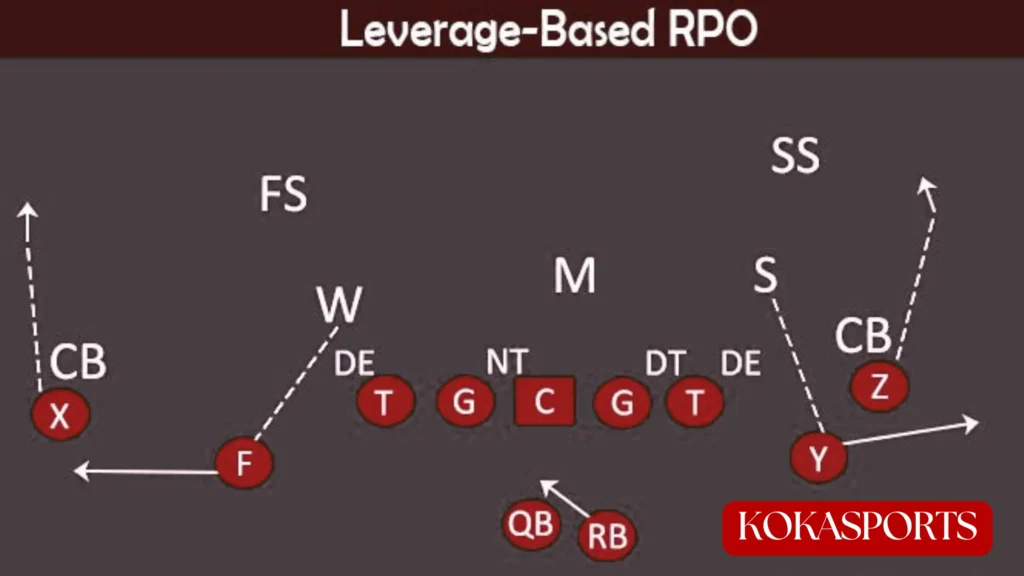
The mechanics behind every RPO start with the offensive line executing run blocks. They fire off the line of scrimmage aggressively, engaging defenders in the box just like any rushing attempt. This creates a critical timing window typically just 1.5 seconds where the play must develop.
Here’s the sequence:
- Pre-snap read: The quarterback scans the defense formation, identifying potential threats
- Snap of the ball: Offensive linemen surge forward with run blocking
- Post-snap decision: QB reads his key defender (usually a linebacker or free safety)
- Execute: Either complete the handoff or pass the ball to the designated target
The running back must maintain his path regardless of whether he gets the ball and run opportunity. He can’t hesitate or peek at what the quarterback decides. Meanwhile, the slot receiver or outside receiver runs a predetermined route commonly a slant, hitch, or bubble screen ready to get the ball if the read dictates passing.
Timing is everything. The entire play happens faster than play action, which requires the quarterback to fake a handoff before throwing downfield. RPOs demand instant decisions with zero hesitation.
Why RPOs Dominate Modern Football
RPOs create an impossible situation for defenses. Traditional defensive strategies require players to either stop the run or drop into coverage. But RPO concepts force a linebacker or safety to do both simultaneously, which simply can’t happen.
Consider this scenario: The offense lines up in a shotgun formation with a tight end slot. The defense puts their strong safety near the box to help against the run. When the ball is snapped, if that safety steps up to stop the inside zone lock scheme, the quarterback immediately throws the ball to the receiver running a quick route where the safety just vacated. If the safety stays back in coverage, the running back gets a cleaner path with one less blocker needed.
This defensive dilemma explains why college football programs and NFL teams have embraced RPO football. Stats show that offenses using RPOs effectively gain more yards per play and force defenses to play fast in their reactions, leading to more mistakes.
| Traditional Offense | RPO Offense |
|---|---|
| Pre-snap decision making | Pre and post-snap reads |
| Defenders can key on one threat | Defenders face dual threats |
| Limited adjustment capability | Maximum flexibility |
| Slower to execute | Lightning-quick execution |
Different Types of RPO in Football
Inside Zone RPO
The inside zone run pairs perfectly with quick passing plays. The running back aims between the tackles while receivers run shallow routes. If the second-level defenders crash to stop the inside run, the quarterback fires a slant or quick out. This type of rpo works exceptionally well in the red zone where space gets compressed.
Bubble Screen RPO
The bubble screen RPO has become standard in every football playbook. Two outside receivers align to one side of the field, with the inside receiver running the bubble route. The quarterback reads the unblocked outside linebacker if he comes up for run support, the ball is thrown to the bubble. If he widens to the receiver, complete the handoff. Many teams use running back motion to create additional stress on that defender.
Slant RPO
A slant route combined with zone blocking creates constant problems for man coverage defenses. The receiver running breaks inside quickly across the middle of the field while the running back runs his track. This RPO punishes aggressive linebackers who cheat toward the line of scrimmage.
Quick Game RPO Concepts
Quick game packages include hitch routes, stick routes, and now screens paired with the run game. These work against both zone and man coverage because the quarterback only needs one simple quarterback read is the key defender playing run or pass? The answer tells him everything.
Best RPO Plays Used at Every Level
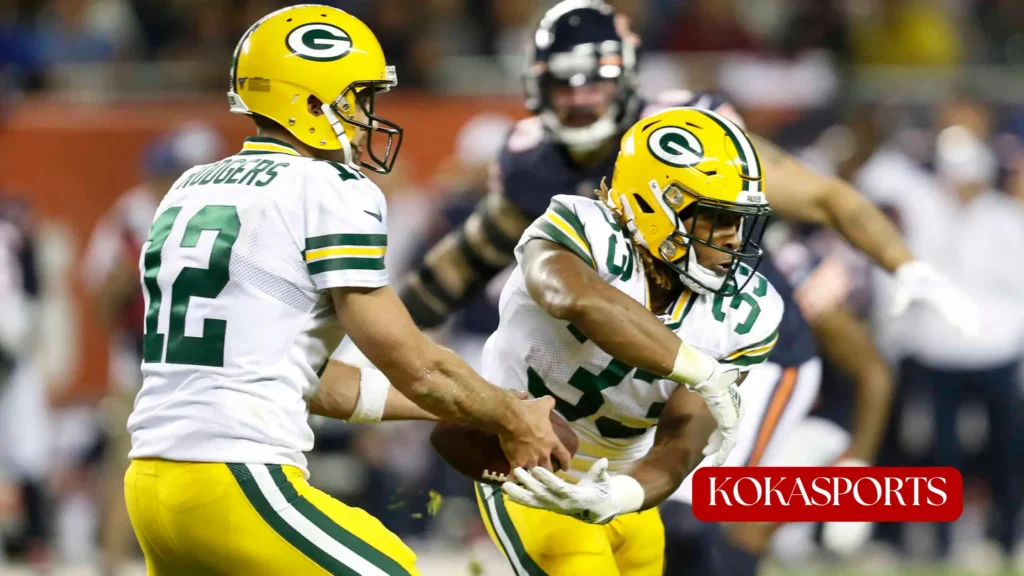
The most effective RPO’s appear consistently from high school fields to professional stadiums. Here are the core plays every offensive coordinator should know:
Slant/Flat RPO: Perfect against aggressive box defenders who commit to the run. The pass option hits the receiver on a quick slant while the back runs tight zone.
Bubble Screen RPO: Forces the defense to declare their intentions immediately. Works especially well when defenses load the box.
Stick RPO: A pass to a receiver running a 5-yard stick route while the back executes outside zone. The QB reads the lineman or second-level defender.
Hitch RPO: Simple and effective. Outside receivers run quick hitches while the run game threatens the middle.
Teams like LSU built championship seasons around mastering these core concepts rather than installing dozens of variations.
RPO vs Play-Action and Option Plays
Many fans confuse RPOs with play-action or the zone read, but critical differences exist:
Play-action involves a fake handoff where the offensive line blocks for pass protection. The quarterback turns his back to the defense, faking the hand the ball motion before throwing downfield. This takes much longer than an RPO.
The zone read (similar to power read and triple option schemes) requires the quarterback to read an unblocked edge defender and decide whether to give the ball or keep the ball and run himself. The pass option doesn’t exist in traditional read plays the QB runs, he doesn’t pass to a receiver.
RPOs blend the best of both worlds with run-pass option versatility that previous systems couldn’t offer. The RPO game happens faster and creates more schematic advantages than traditional option plays.
How RPOs Fit Into a Football Playbook
Every offensive coordinator faces the same question when developing their game plan: How many RPOs should we install? The answer depends on your quarterback’s ability to run the concepts and make quick decisions.
Building an effective playbook around RPOs requires strategic thinking:
Key Installation Principles:
- Start with one base run play (inside zone or outside zone)
- Add 2-3 complementary pass tags
- Drill the timing until it becomes automatic
- Build from shotgun before attempting pistol or under-center variations
- Never sacrifice blocking integrity for complexity
Teams don’t need 20 different RPOs. They need 5-7 concepts executed perfectly. The head coach must emphasize repetition and decision-making speed over variety. When the quarterback masters reading one key defender and making instant choices, the entire offense becomes more explosive.
The football league landscape shows that teams winning with RPOs keep their systems simple. They run core concepts from multiple formations rather than installing complex variations that slow down execution.
Defending Against RPOs
Defensive coordinators lose sleep over RPO football. To commit to the run means leaving receivers open. To respect the pass game means giving up rushing yards. The only solution requires extreme discipline.
The best defensive strategy involves pattern-matching where defenders use a hybrid technique “peeking” at the backfield while maintaining awareness of receivers. The free safety often becomes critical, reading the quarterback’s eyes and reacting to whether he pulls the ball and run the RPO’s passing element.
Some defenses try putting their coverage on receivers while keeping a safety free to spy the mesh point. Others use simulated pressure to disrupt timing. But even disciplined defenses struggle because one mental mistake or physical mismatch anywhere on the sideline or in the box creates explosive opportunities.
The Future of RPO Football
The evolution continues. Modern offenses now blend RPOs with play-action, quarterback draw schemes, and even the classic draw play concepts. The football league landscape from high school through the NFL has permanently changed.
What started as a spread offense innovation has become fundamental to every level of competitive football. Even pro-style systems now include multiple RPO concepts because the numbers don’t lie: RPOs create advantages that traditional play-calling simply cannot match.
The RPO game will keep evolving as coaches discover new ways to stress defenses and as defensive coordinators develop counter-strategies. But the core principle remains unchanged forcing one defender to defend two things simultaneously will always create opportunities.
Conclusion
RPO football represents more than just a trend. It’s a fundamental shift in offensive philosophy that maximizes efficiency by putting defenders in impossible situations. Whether you’re a player trying to execute these concepts, a coach installing them in your system, or a fan wanting to better appreciate what’s happening on the field, knowing how RPOs work enhances your football experience.
The run-pass option gives offenses a powerful tool that simplifies the quarterback’s job while complicating the defense’s assignment. As the tight end, receivers, and running back work in perfect synchronization with the QB’s pre-snap read and post-snap decision-making, football reaches its highest level of coordination and strategy. That’s why RPOs aren’t going anywhere they work, they’re teachable, and they create the explosive plays that win games.
FAQs
Is RPO the same as play action?
No, an RPO allows a post-snap run or pass decision, while play action is a pre-decided pass with a run fake.
What is an example of an RPO play?
Inside zone paired with a slant or bubble screen is a common RPO play.
How to run the RPO?
The quarterback reads a key defender after the snap and decides to hand off or throw a quick pass.
How to identify an RPO in football?
Look for run blocking with a quick pass thrown immediately after the snap based on a defender’s reaction.