
The ace formation football is one of the smartest choices for youth football coaches who want a simple yet powerful offensive formation. This balanced setup keeps defenses guessing while teaching young players proper fundamentals. Whether you’re brand new to coaching or looking to add proven plays to your playbook, this guide shows you exactly how to run ace effectively.
What Is the Ace Formation Football?
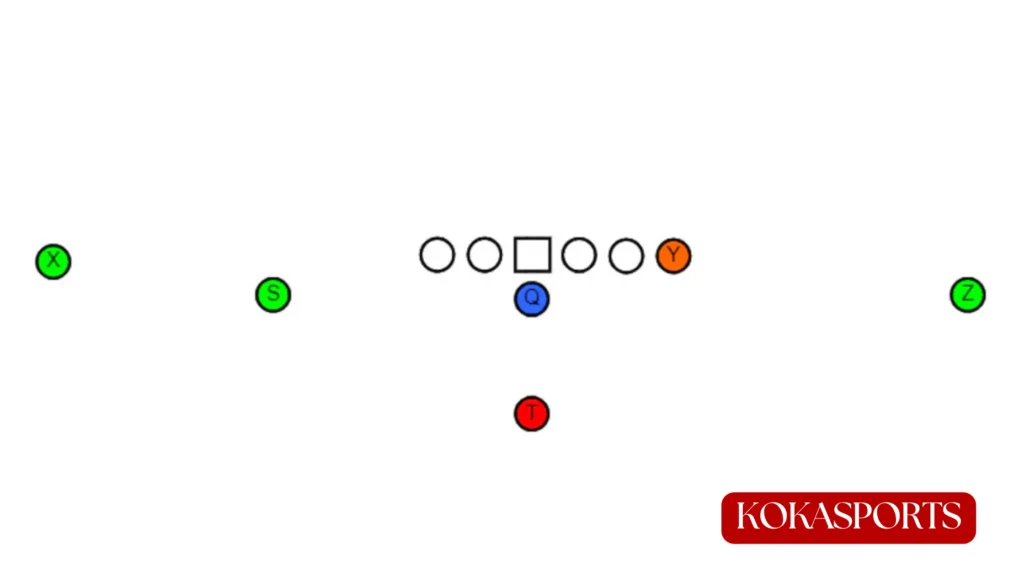
The ace is a single-back formation where one running back lines up directly behind the quarterback in the backfield. Unlike the I-formation that stacks two backs, or the double wing formation that uses two tight ends, ace creates balance with typically two wide receivers, one tight end, and five offensive linemen on the line of scrimmage.
This setup works brilliantly because defenses can’t predict if you’ll run or throw the ball. The balanced look forces defenders to stay honest, creating opportunities for both your run game and passing attack.
Why it’s called “ace”: The term comes from card games where an ace represents top value fitting for a formation that gives you maximum options.
Read More: Shotgun Formation: A Game-Changing Setup in American Football
Ace Formation Structure and Alignment
Basic Setup
Seven players line up on the line of scrimmage, with the quarterback under center and the running back positioned about 4-5 yards deep. Most teams running this formation use what’s called 11-personnel:
- 5 offensive linemen (center, two guards, two tackles)
- 1 tight end (usually on the strong side)
- 2 receivers split wide
- 1 quarterback under center
- 1 running back in the backfield
This creates a one running back system that’s easy for kids to learn while remaining effective against youth defenses.
Position Responsibilities Made Simple
Quarterback: Takes the snap, hands off to the back, or executes play-action passes. His ability to throw after faking handoffs makes this formation deadly.
Running Back: The running back would either take handoffs for runs or block on pass plays. Positioning him closer to the line than shotgun formations allows for quicker-hitting runs.
Tight End: Serves as both blocker and pass catcher. The tight end can seal the edge on runs or release into pass routes. Having a tight end to the back-side provides blocking help weak-side.
Wide Receivers: Must block on run plays and run routes on passes. The two receivers force defenses to defend the full width of the field.
Offensive Line: These five offensive linemen create running lanes and protect the quarterback. Simple blocking rules make this perfect for teaching youth players.
Why the Ace Formation Works So Well
Strengths That Win Games
Balanced attack: Defenses can’t load the box against runs without risking deep passes. You can run inside zone, power plays, and sweeps with equal effectiveness.
Play-action gold: Because the offense establishes credible run threats, play-action passes freeze linebacker and safety play, opening huge passing windows.
Simple teaching: Young players learn assignments faster because the formation doesn’t change dramatically from play to play.
Flexible personnel: Many offenses can change personnel into 12-personnel (adding a second tight end) without completely changing the system.
What to Watch Out For
No formation is perfect. The ace has limitations you should know:
- Predictability: If you run the same plays repeatedly, smart defenses will catch on
- Blitz vulnerability: Pressure from an outside linebacker can disrupt timing
- Limited spread: Against defenses that dominate the box, you might need more receivers
The key is mixing up your play calls and using motion to create confusion.
Best Ace Formation Plays for Youth Football
Essential Run Plays
Inside Zone: Your bread-and-butter zone run game. The running back reads his blockers and cuts to daylight. This teaches young players to read blocks rather than just following predetermined paths.
Power: A pulling guard leads through the hole while the tight end seals the edge. This downhill run punishes defenses that over-pursue.
Counter: The back takes false steps one way before cutting back. Perfect for when defenses start flowing too aggressively to your primary running direction.
Sweep: Get your athletes in space. The running back follows pulling offensive linemen around the edge, attacking the side of the formation with numbers.
Dive: Quick-hitting play between the guards. Simple blocking makes this a great first-down play.
Must-Have Pass Plays
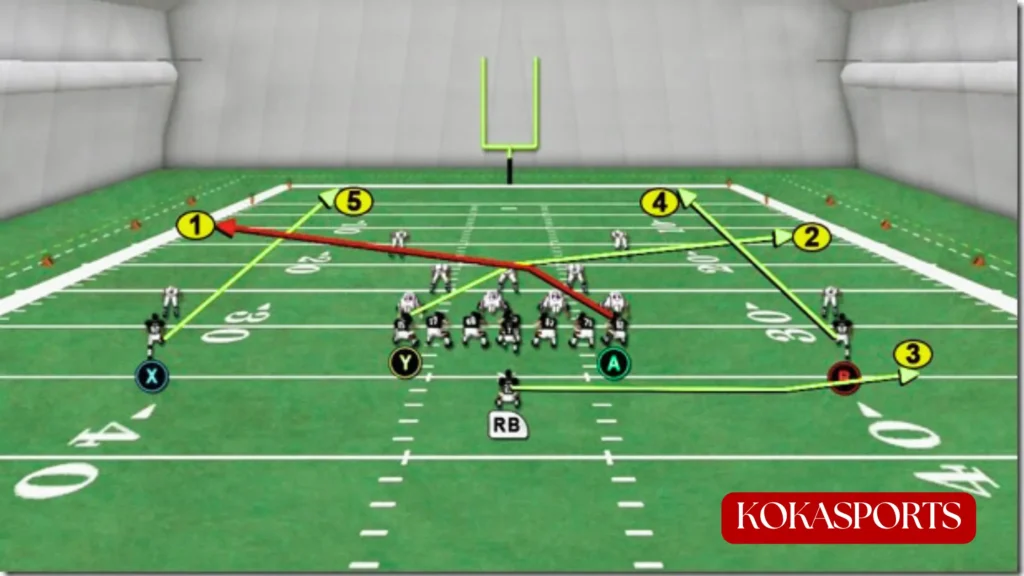
Play-Action Post: Fake the handoff, then hit your receiver on a deep post route down the middle of the field. Safeties biting on the run fake creates big plays.
Quick Slants: Three-step drop, throw to receivers breaking inside. Perfect against aggressive defenses.
Waggle (Bootleg): Quarterback fakes the handoff, then rolls out opposite the run fake. The tight end releases for an easy throw.
Screen Pass: Let rushers come free, then dump the ball to your running back with offensive linemen leading the way.
Flood Concept: Overload one side with multiple receivers at different depths. Forces defenders to make choices.
Sample Play Chart
| Down & Distance | Best Play Options | Why It Works |
|---|---|---|
| 1st & 10 | Inside Zone, Play-Action Post | Keep defense guessing |
| 2nd & Short | Power, Dive | Get the first down |
| 2nd & Long | Quick Slants, Screen | Move the chains safely |
| 3rd & Medium | Counter, Waggle Boot | Misdirection creates space |
| Goal Line | Power, two tight ends package | Pound it in |
How to Defend the Ace Formation
Smart coaches teach both offense and defense. Here’s what defender units should know.
Defensive Alignments
4-3 Defense: Four down linemen control gaps while three linebackers read and react. The defensive end plays with an outside shade of the tight end to force runs inside.
3-4 Defense: Three down linemen occupy blockers while four linebackers provide speed and flexibility. The outside linebacker or walk-up backer can rush or drop into coverage.
Key for defenders: Maintain gap discipline. Each defender must control his assigned gap, whether that’s the presence in the d gap or containing the edge.
Reading Pre-Snap Keys
Teach your defenders to look for these clues when it comes to the ace formation:
- Tight end stance: Two-point stance suggests pass; three-point stance indicates run
- Running back depth: If the back is deep in the backfield, passes become more likely
- Receiver splits: Tight splits suggest run blocking; wide splits indicate passes
- Offensive linemen: Watch their stance and hand placement
Coverage Concepts
Cover 3: Three deep defenders protect against big plays while four defenders cover underneath. Great for defending ace because it balances run support with pass coverage.
Cover 2 Man: Corners play man coverage on receivers while safeties split deep responsibilities. The linebacker can focus on stopping runs.
Blitz Packages: Bringing the outside linebacker or nickel creates immediate pressure, but leaves you vulnerable to quick passes.
According to defensive coordinators who like to focus on defending ace, the key is forcing offenses into obvious passing situations where you can pin your ears back and rush.
Ace Formation Variations You Need
Ace Twins
Place both wide receivers on the same side of the formation. This creates two receivers to one side with the tight end opposite. Forces defenses to adjust coverage, often creating one-on-one matchups you can exploit.
When to use: Against defenses that struggle covering receivers in space, or when you have a dominant receiver you want isolated.
Ace Trips (Less Common)
Three receivers to one side. This starts looking more like spread offense, but some teams use this as a change-up.
Adding Motion
Motion is your secret weapon. By moving a receiver or tight end before the snap, you can:
- Identify man versus zone coverage
- Create blocking angles
- Force defenders to adjust
- Generate easy reads for your quarterback
Simple jet motion works great at the youth football level because young defenders often lose gap discipline chasing motion.
Building Your Ace Playbook
Start small. Don’t overwhelm young players with 50 plays. Begin with these core concepts:
Week 1-2: Teach inside zone and one play-action pass Week 3-4: Add power run and quick slant passes
Week 5-6: Install counter and waggle bootleg Week 7+: Add special plays and variations
Critical coaching tip: Master execution over variety. Teams running six plays perfectly beat teams running 20 plays poorly. Focus on fundamentals proper steps, hand placement, and finish.
Organizing Your Playbook
Group plays by situation rather than alphabetically:
- Early down plays: Establish the run, set up play-action
- Second-and-long plays: Move chains safely
- Third-down plays: Critical conversions
- Red zone plays: Score touchdowns
- Short-yardage plays: Get the tough yards
This organization helps you call plays faster during games without frantically flipping pages.
Teaching Youth Players the Ace
Simplify the Language
Young players don’t need complex terminology. Instead of “22 Inside Zone Weak,” call it “Two Dive.” Use numbers and directions kids already know.
Simple play calling examples:
- “Power Right” = Run power to the right side
- “Slant Left” = Receivers run slant routes, QB looks left
- “Boot Right” = Bootleg action to the right
Drill Progression
Step 1: Walk-through without defenders (learn alignments and assignments)
Step 2: Walk-through against scout team showing look (practice vs. actual defense)
Step 3: Half-speed repetitions (build muscle memory)
Step 4: Full-speed practice (game simulation)
Step 5: Scrimmage situations (add real pressure)
Repeat this cycle for each new play. Repetition builds confidence.
Safety First
Proper technique prevents injuries:
- Blocking: Stay low, keep head up, hands inside
- Tackling (defensive): Head up, wrap arms, drive through contact
- Ball security: Cover the ball with both arms in traffic
Never sacrifice safety for wins. Teach fundamentals correctly from day one.
Real Success Stories
A 10U team in Ohio went 9-1 running just eight plays from ace. Their coach focused on perfect execution rather than scheme variety. Players knew assignments so well they could adjust to any defense.
At the high school level, a program struggling at 2-8 switched to ace the next season. By simplifying their system and emphasizing fundamentals, they finished 7-3 and made playoffs. The offense averaged 28 points per game double their previous season.
The lesson? Simplicity executed well beats complexity executed poorly.
FAQs
What is an ace formation in football?
The ace formation is a single back formation with one running back directly behind the quarterback, one tight end, and two receivers creating balanced run-pass options.
Why is 4-2-3-1 the best formation?
4-2-3-1 is soccer; in football, ace works best for youth football because it balances run game and passing while staying simple to teach.
What is the 12 personnel ace formation?
12 personnel ace uses one running back and two tight ends, replacing a receiver for extra blocking power in short-yardage situations.
What is a 3 tight end set called?
A three tight end package is called “13 personnel” or “jumbo,” used at the line of scrimmage for goal-line power blocking.