

If you watch football regularly, you’ve probably heard announcers talk about personnel groupings but what does it all mean? 11 personnel football is the most common offensive formation in today’s game, and it simply means 1 running back, 1 tight end, and 3 wide receivers on the field.
This guide breaks everything down in plain, simple language from football 101 basics to advanced strategy. By the end, you’ll know exactly what 11 personnel football is, why it dominates modern offenses, and how it compares to every other major formation in the game.
What Is 11 Personnel Football? 101 Breakdown
Before diving deep, let’s cover the basics of offensive personnel packages. Every offensive play starts with 11 players on the field five offensive linemen and the quarterback always count, so the remaining five spots are filled by skill players. Coaches use a two-digit numbering system to describe who those five players are.
- The first digit = number of running backs
- The second digit = number of tight ends
- Wide receivers fill the rest of the spots automatically
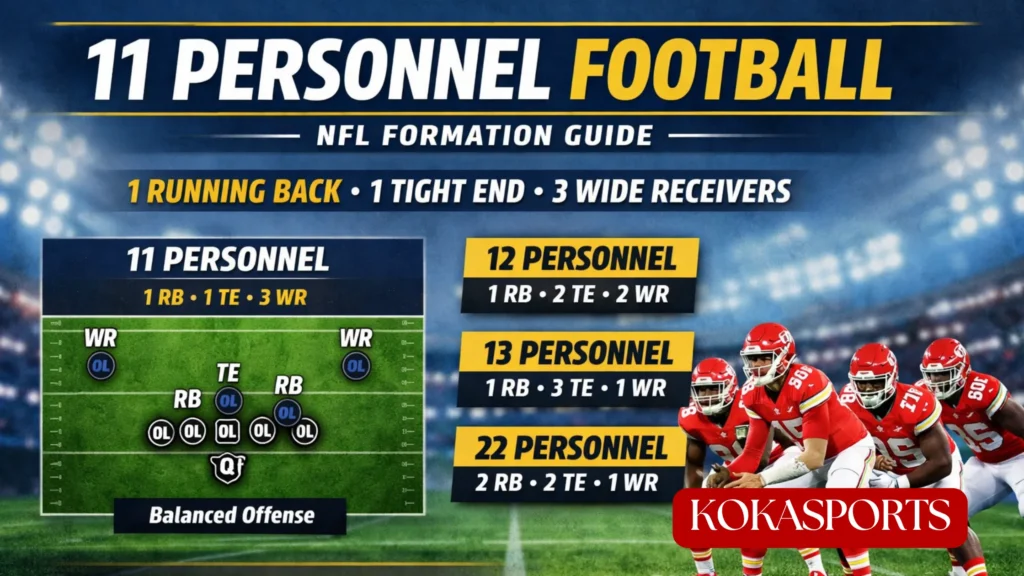
So 11 personnel means: 1 running back + 1 tight end + 3 wide receivers. Simple as that.
Here’s a quick cheat sheet for all the major NFL personnel groupings:
| Personnel Group | Running Backs | Tight Ends | Wide Receivers |
|---|---|---|---|
| 10 personnel | 1 | 0 | 4 |
| 11 personnel | 1 | 1 | 3 |
| 12 personnel | 1 | 2 | 2 |
| 13 personnel | 1 | 3 | 1 |
| 21 personnel | 2 | 1 | 2 |
| 22 personnel | 2 | 2 | 1 |
The 11 personnel grouping has become the most popular personnel grouping in the NFL by a massive margin. According to NFL tracking data, teams used 11 personnel on over 60% of all offensive plays in recent seasons. That number keeps growing every year.
Why 11 Personnel Football Took Over the NFL
There’s a very simple reason why 11 personnel football became the main personnel package in modern offenses it puts the defense in an impossible situation.
When you put three wide receivers on the field, the defense has a problem. If they keep their traditional base defense on the field (with extra linebackers), those linebacker players are too slow to cover fast wide receivers. But if the defense brings in extra defensive back players to match up, now they’re lighter in the box and more vulnerable to the run.
“Eleven personnel forces the defense to choose between defending the pass and defending the run. You can’t do both perfectly.” A common philosophy among modern NFL offensive coordinators
This is what coaches call a matchup problem. The offense wins before the snap is even taken.
Key reasons 11 personnel dominates:
- Creates natural speed mismatches across the field
- Spreads the defense horizontally, opening run lanes
- Allows for quick, easy reads for the quarterback
- Works perfectly with RPO (run-pass option) concepts
- Fits the modern pass-first NFL perfectly
How the Personnel Numbering System Works (The Full Picture)
Now that you know the basics, let’s look at all the offensive personnel groupings in football so you can see exactly where 11 personnel sits in the bigger picture of offensive football.
10 Personnel : Four Wide Receivers, Empty-ish Backfield
10 personnel puts four wide receivers on the field with just one running back. This is a pure passing formation designed to stress the secondary. Teams typically use this in obvious passing situations or when they want maximum speed. The problem? You lose the tight end’s blocking help and it becomes easier for defenses to know a pass is coming.
11 Personnel : The Gold Standard
This is the one. One running back, one tight end, and three receivers on the field. It’s the perfect balance between passing ability and run-game threat. The tight end gives you a blocker when you need one, a receiver when you want one, and a red zone weapon always. The single running back in the backfield keeps defenses honest.
12 Personnel : Two Tight Ends, Power Run Game
12 personnel uses two tight ends instead of three wide receivers. This is the second most used personnel package in the NFL. Teams like the Kansas City Chiefs and San Francisco 49ers have famously mixed 12 personnel with 11 to keep defenses off balance. The extra tight end gives you more blocking power and a great red zone target, but you sacrifice one speed weapon at wide receiver.
13 Personnel : Three Tight Ends, Short Yardage Beast
13 personnel brings three tight ends on the field and only one wide receiver. You’ll see this almost exclusively near the goal line or on fourth-and-short. It’s pure power football. The tradeoff is obvious defenses know a run is very likely.
21 Personnel : Old School Two-Back Sets
21 personnel means two running backs and one tight end. This was the standard NFL formation for decades before the spread era. The fullback was a key part of this grouping, leading runs and blocking in the flat. While two running back sets are rare today, some teams still pull them out in specific situations.
22 Personnel : Maximum Power
22 personnel is the most physical grouping in football. Two running backs and two tight ends with only two wide receivers on the field. Teams use this for power runs, goal line situations, and when they want to physically dominate. It’s rare in today’s pass-happy NFL but still effective in short-yardage spots.
The Players That Make 11 Personnel Work
The reason 11 personnel is so successful comes down to the specific roles each player plays. Every position has a job, and when they all work together, it’s almost impossible to stop.
The Quarterback
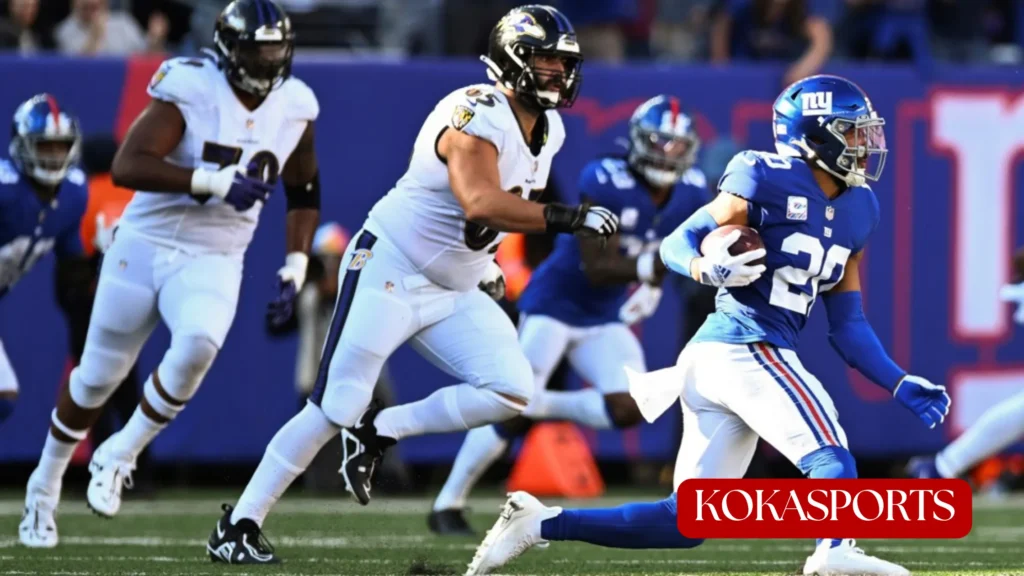
The quarterback is the brain of any 11 personnel offense. With three wide receivers spread across the field, he needs to process information quickly reading coverages, identifying the open man, and making fast decisions. The best quarterbacks in 11 personnel are both accurate and mentally fast.
The Wide Receiver Trio
In 11 personnel, you always have wide receivers on the field in three spots:
- The X receiver lines up on the weak side, usually the team’s best outside route runner
- The Z receiver lines up on the strong side, often a yards-after-catch specialist
- The slot receiver lines up inside, the most important wide receiver in the whole system
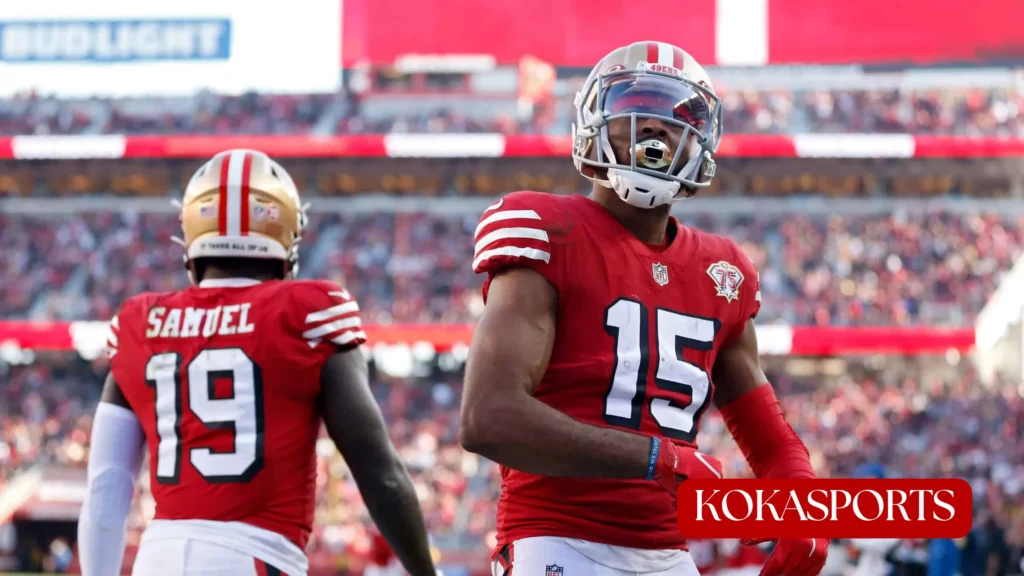
The slot receiver is the engine of most 11 personnel offenses. They see the most targets, run the most routes, and create the most problems for defenses. Players like Tyreek Hill, Stefon Diggs, and Cooper Kupp built Hall of Fame careers thriving in 11 personnel systems.
The Tight End
In 11 personnel, the tight end wears many hats. Unlike in 12 personnel where you have two tight ends to share the load, here there’s only 1 tight end doing everything. He blocks on run plays, runs routes in the pass game, creates mismatches against slower linebackers, and serves as a safety valve for the quarterback. Think Travis Kelce, George Kittle, or Mark Andrews elite athletes who can do it all.
The Running Back
Having just one running back might seem limiting, but it actually creates opportunities. With 1 running back in the game, defenses can’t always tell if a play will be a run or pass. The running back also becomes a weapon as a receiver out of the backfield, running check-down routes and screen passes. The best backs in 11 personnel are versatile they can throw the ball routes, block a blitzing linebacker, and carry the rock between the tackles.
How 11 Personnel Works on the Field
The Run Game
A big myth is that 11 personnel is only for passing. Wrong. The run game out of 11 personnel is actually very effective because defenses must respect the three receivers. When a defense spreads its defensive back players wide to cover receivers, the middle of the field opens up. Running plays like inside zone, outside zone, and counters all work beautifully when the defense is spread thin. The offensive line gets to block a lighter box almost every single down.
The Pass Game
The pass game out of 11 personnel is what really makes it special. With three receivers on the field spread from one side of the formation to the other, defenses are stretched to the breaking point. Common concepts include:
- Mesh routes crossing patterns that are nearly impossible to cover
- Four verticals sending all four wide receivers (tight end counts) deep
- Smash concepts attacking both short and deep on the same side
- RPOs letting the quarterback decide run or pass after reading the defense
Play-Action Magic
One of the sneaky benefits of 11 personnel is how well play-action passing works. Because the offense is a legitimate run threat even with just one running back, defenses must react to run fakes. That split second of hesitation is all a good quarterback needs to launch a deep ball to an open receiver.
11 Personnel in College Football
College football was actually ahead of the NFL in adopting 11 personnel. Spread offenses at schools like Oklahoma, Oregon, and Ohio State were using three-wide receiver sets years before the NFL fully embraced them. As those college quarterbacks and skill players entered the NFL Draft, they brought their familiarity with 11 personnel with them and the NFL followed their lead.
How Defenses Try to Stop 11 Personnel
No offensive coordinator sleeps easy knowing great defensive minds are scheming against their 11 personnel attack. Here’s how defenses fight back:
| Defensive Response | Description | Weakness |
|---|---|---|
| Nickel Package (5 DBs) | Replaces a linebacker with a DB | Lighter vs. run |
| Dime Package (6 DBs) | Even more pass coverage | Very light box |
| Man Coverage | DBs lock up receivers 1-on-1 | Vulnerable to pick routes |
| Zone Coverage | DBs cover areas, not men | Short passes available all day |
| Blitz | Extra pass rushers attack the QB | Leaves receivers open |
The bottom line is that 11 personnel forces the defense to make a choice and no matter what they choose, there’s always a way to attack them.
A Quick Case Study: The Kansas City Chiefs
No NFL team has used 11 personnel more effectively than the Kansas City Chiefs under head coach Andy Reid. Reid’s playbook is a masterclass in 11 personnel concepts. With Patrick Mahomes at quarterback, Travis Kelce at tight end, and multiple elite wide receivers, the Chiefs turn 11 personnel into an art form. They mix passing plays and running plays seamlessly, never letting defenses settle into a comfort zone.
Their personnel usage data over recent seasons shows 11 personnel on nearly 70% of snaps far above the league average.
FAQs
What is 11 and 12 personnel football?
In the NFL, 11 personnel means 1 RB, 1 TE, 3 WR, while 12 personnel means 1 RB, 2 TE, 2 WR.
What does 13 personnel mean in football?
13 personnel = 1 RB, 3 TE, 1 WR, usually used in short-yardage or goal-line situations.
What does 22 personnel mean in football?
22 personnel = 2 RB, 2 TE, 1 WR, a heavy formation focused on power running.
Which formation is in 11 personnel?
11 personnel typically uses spread formations with 3 WR, 1 TE, and 1 RB, creating a balanced run-pass offense.
Final Thoughts
Football offensive personnel packages can seem complicated at first, but once you learn the numbering system, everything clicks. 11 personnel with its running backs and tight ends working alongside three wide receivers is the most powerful, flexible, and common personnel grouping in the game today. It works in the run game, it dominates in the pass game, and it creates matchup problems that even elite defenses struggle to solve.
Whether you’re watching the NFL, college football, or your Friday night local game, you’ll see 11 personnel everywhere. Now you know exactly why.